
Pool Inspections in NC: Timing, Process, and Choosing an Inspector
A pool inspection is a structural, safety, and equipment evaluation that takes 45 to 90 minutes and covers everything a general home inspection leaves out. The right time to book one is before you buy or sell a home with a pool, before you open it each season, and after any major storm. At Q&A Home Inspections, we get the same three questions from Greensboro and Triad homeowners every week: when do I need this, what does it actually cover, and how do I pick someone qualified. Here is a straight answer to all three, plus what a DIY check can and cannot catch on its own.
Is a Pool Inspection Worth the Time?
A pool inspection is worth it because it turns guesswork into documentation, whether you are negotiating a purchase, listing a home, or just want to know what you are dealing with before summer starts. A written report with photos gives you something to act on instead of a general sense that the pool “seems fine.”
For buyers, that documentation is leverage. A pool inspection that turns up a bonding gap, a worn pump, or a non-compliant gate gives you a specific, defensible item to negotiate before closing, not a hunch. For sellers, the same report lets you fix small issues on your own terms instead of having a buyer’s inspector find them first and use them to renegotiate late in the process.
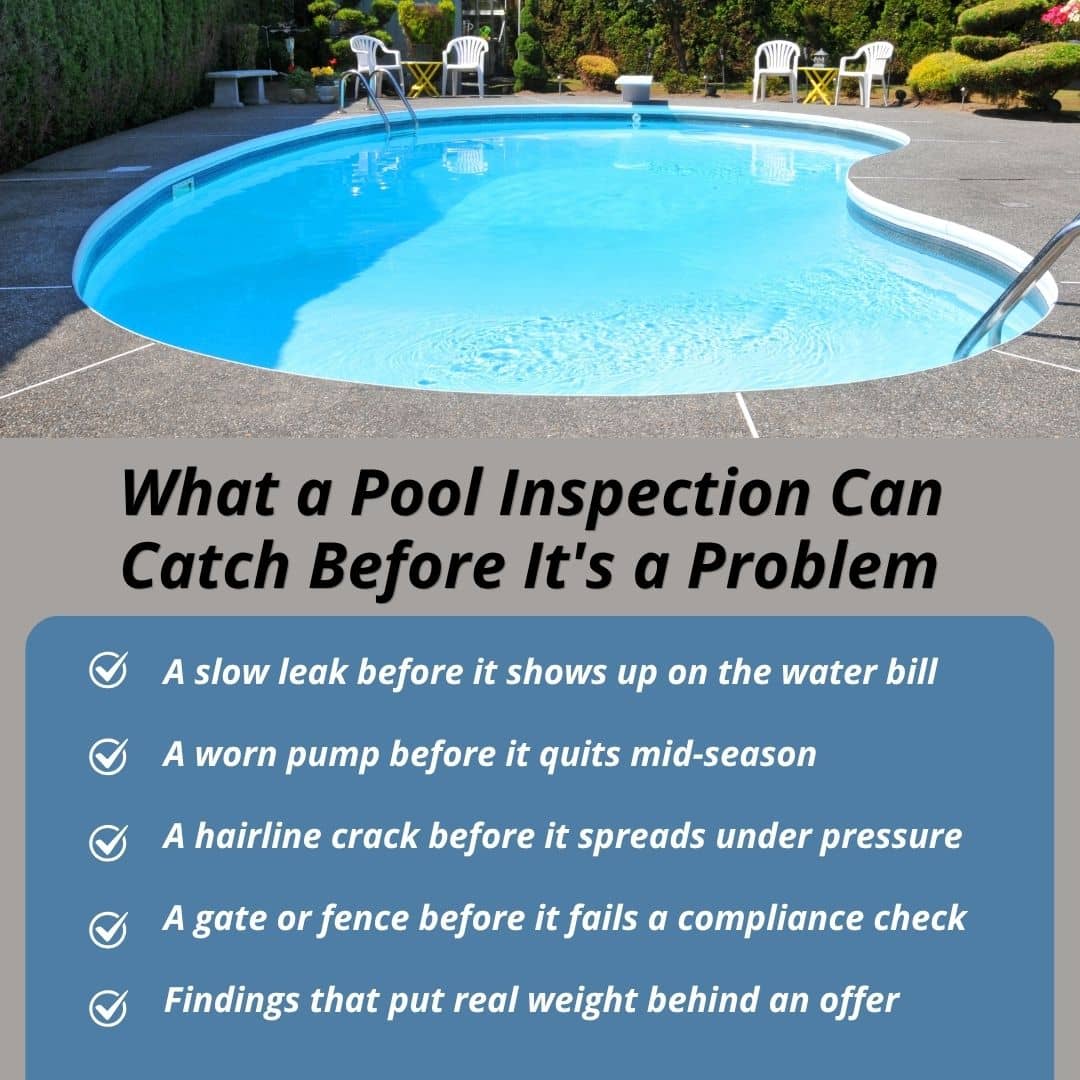
For pool owners who are not buying or selling anything, the value is simpler: safety. A crack in the shell, a bonding gap, or a fence latch that stopped self-closing can all sit unnoticed for a full season. A pool inspection puts those items in writing before someone gets hurt or a small problem becomes a bigger repair.
When Do You Need a Pool Inspection?
You need a pool inspection any time you are buying or selling a home with a pool, at the start of each swimming season, and after severe weather. Outside of those moments, an annual check is worth scheduling even if nothing seems wrong.
Buying or selling. A general home inspection does not fully evaluate a pool. If a pool is part of the deal, request a dedicated pool inspection alongside the standard home inspection so problems surface during negotiations instead of after closing. Our guide on why NC buyers need a pre-purchase home inspection walks through how to build that request into your offer timeline.
Before opening season. Pools that sit closed over winter need a check before the first swim of the year, especially older pools that have not had a professional look in a while.
After a storm or hard freeze. Heavy rain, high winds, and freezing temperatures can crack decking, damage equipment, or shift a fence out of code, and a quick glance often misses all three.
Annually, even without a sale. Equipment ages, gaskets wear, and fence latches loosen whether or not the property is changing hands. Our post on yearly home inspections for NC homes covers the same logic for the rest of the house, and it applies just as well to the pool sitting behind it.
After unpermitted work. If anyone has touched the pool’s electrical or plumbing without a permit, get it checked. Unpermitted work is one of the most common sources of the problems inspectors find.
What Happens During a Pool Inspection?
A pool inspector walks through the structure, equipment, electrical system, and safety barriers, and documents anything that needs attention in a written report. The inspection is visual and operational. Inspectors run the equipment, check for leaks and damage, and test safety features, but they do not dismantle components or test full water chemistry the way a pool service company does on an ongoing basis.
At a high level, a real pool inspection covers the shell and decking, plumbing and circulation, filtration and pumps, electrical and bonding, heaters, automation, and safety barriers like fencing and gates. This is a separate scope from a standard home inspection. Standards from InterNACHI’s Pool and Spa Inspection Standards of Practice treat pools and spas as their own inspection category for exactly this reason, with a checklist that looks nothing like a house walk-through.
If you want the full item-by-item breakdown of what each of those nine areas covers and the most common problems we find in Central North Carolina pools, we cover that in detail in What Does a Swimming Pool Inspection Cover in NC? Our general home inspection service, by comparison, focuses on the house itself: roof, foundation, electrical panel, plumbing, and HVAC.
How to Choose a Qualified Pool Inspector
Choose a pool inspector who is licensed in North Carolina, trained specifically on pool and spa inspection standards, and willing to give you a written report with photos. A general home inspection license does not automatically include pool training, so it is worth asking directly.
A few questions to ask before you book:
- Are you a licensed North Carolina home inspector? This is the baseline credential for anyone inspecting real property in the state.
- Do you have specific training in pool and spa inspection? Ask if they have completed pool-specific coursework, such as InterNACHI’s pool and spa program, rather than treating the pool as an afterthought during a house inspection.
- Will I get a written report with photos? A verbal summary is not enough for a real estate transaction or an insurance claim. Get documentation.
- Do you check electrical bonding and GFCI protection? This is one of the most safety-critical parts of a pool inspection and one of the easiest to skip if an inspector is rushing.
- Can you inspect the pool at the same visit as the house? Bundling saves time during a real estate closing timeline, as long as the inspector has the training to do both properly.
At Q&A Home Inspections, our inspectors are trained under InterNACHI’s Pool and Spa Inspection Standards of Practice and back every inspection with a detailed digital report, so you know exactly what you are getting before you decide to buy, sell, or open your pool for the season.
DIY Pool Checks vs. Professional Pool Inspections
A DIY check can catch day-to-day maintenance issues, but only a professional inspection verifies structural condition, code compliance, and hidden electrical or plumbing problems. The two are not substitutes for each other.
What you can reasonably check yourself, week to week:
- Water clarity and basic chemistry, using a test strip or liquid test kit
- Skimmer baskets and visible debris
- Obvious cracks, stains, or damage on the surface you can see
- Whether the gate self-closes and self-latches
What a DIY check cannot reliably catch:
- Slow leaks in underground plumbing
- Electrical bonding and grounding faults
- Whether fencing and gate hardware meet current North Carolina code
- Internal wear in pumps, filters, and heaters
- Structural cracking below the waterline or under decking
Think of DIY checks as routine upkeep between professional inspections, not a replacement for one. The CPSC’s Safety Barrier Guidelines for Home Pools exists precisely because barrier problems are easy to miss with a casual glance and hard to catch without someone measuring height, latch placement, and gate function against the actual code.
Local Factors That Affect Pool Inspections in the Triad
Two things push pool inspections from optional to necessary for Greensboro and Triad homeowners: aging pool stock and North Carolina’s minimum safety code. Many local pools were installed years before current barrier and electrical requirements existed, and a fence or gate can sit grandfathered in for decades without anyone confirming it still meets today’s standard. Piedmont clay soil also shifts with seasonal rain and drought, which is a common cause of the cracked or heaving decking inspectors find around older pools in the area.
Pool listings also tend to spike heading into spring and summer, right when buyers want to close fast and start swimming the same season. That urgency is exactly when a pool inspection gets treated as optional. Skipping it does not remove the risk sitting in the shell, the wiring, or the fence. It just delays the discovery date to after closing.
For the full breakdown of NC-specific code requirements, common local findings, and a room-by-room look at what inspectors check, see What Does a Swimming Pool Inspection Cover in NC?
Related Questions to Explore
Is a pool inspection included in a home inspection? No. A standard home inspection does not fully evaluate a pool’s structure, equipment, or safety barriers. Most home inspection agreements list pools and spas as a limitation or exclusion, so you need to request the pool inspection separately.
How long does a pool inspection take? Most standalone pool inspections take 45 to 90 minutes, depending on pool size and how much equipment is on-site. Larger pools with spas, automation, or extensive water features can run closer to two hours.
What is the difference between a pool inspection and a pool maintenance visit? A pool inspection is a one-time structural, safety, and equipment evaluation with a written report. A maintenance visit is an ongoing service, usually weekly or biweekly, focused on water chemistry and routine upkeep rather than structural or code compliance.
Can I skip a pool inspection if the seller says the pool is fine? You can, but it is a risk. A seller’s word is not a substitute for a documented, professional evaluation, and problems like bonding gaps or non-compliant fencing are not the kind of thing you can spot by looking at clear water.
What credentials should a pool inspector have? Look for a North Carolina-licensed home inspector with specific pool and spa training, such as completion of InterNACHI’s Pool and Spa Inspection Standards of Practice, and confirm they provide a written report with photos.
When to Call a Professional
Call a professional pool inspector before you buy or sell a home with a pool, before you open the pool for the season, and after any storm, flood, or hard freeze that could have damaged the structure or equipment. The same goes for any pool that has had electrical or plumbing work done without a permit.
Q&A Home Inspections serves Greensboro, High Point, Winston-Salem, and the rest of the Triad with dedicated pool and spa inspections backed by a detailed digital report. If you are not sure whether your situation calls for a full inspection or a simple DIY check, reach out and we can help you figure out which one you need.
Conclusion
The right time to schedule a pool inspection is before a real estate closing, before pool season opens, or after severe weather. A DIY check can handle routine upkeep, but only a licensed, pool-trained inspector can confirm structural condition, code compliance, and hidden electrical or plumbing issues.
Q&A Home Inspections offers dedicated pool and spa inspection services across Greensboro and the Triad. Schedule an inspection or contact us with questions before your next closing or opening day.