
Why You Need a Yearly Home Inspection for Your NC Home
Owning a home in Central North Carolina is a major investment and a point of pride for families from Greensboro to Raleigh. Whether you live in a historic bungalow in Winston-Salem or a modern build in Wake County, your property requires constant care to stay in top shape.
Many homeowners believe that a home inspection is only necessary when buying or selling a house. However, scheduling an annual home maintenance inspection is one of the smartest moves you can make to protect your property and your bank account.
A yearly home inspection acts like a wellness checkup for your house. It allows a home inspector to look at the property’s condition through a professional lens.
By identifying small issues early, you can avoid the costly repairs that occur when problems are left to grow. In our region, where humidity and shifting clay soil are common, being proactive is essential.
What Is an Annual Home Maintenance Inspection?
An annual home inspection is a comprehensive evaluation of your home’s standing. Unlike a transaction-based inspection, this service is designed specifically for the current homeowner.
The goal is to provide a clear written report on how your electrical systems, plumbing, and structure are holding up against the elements.
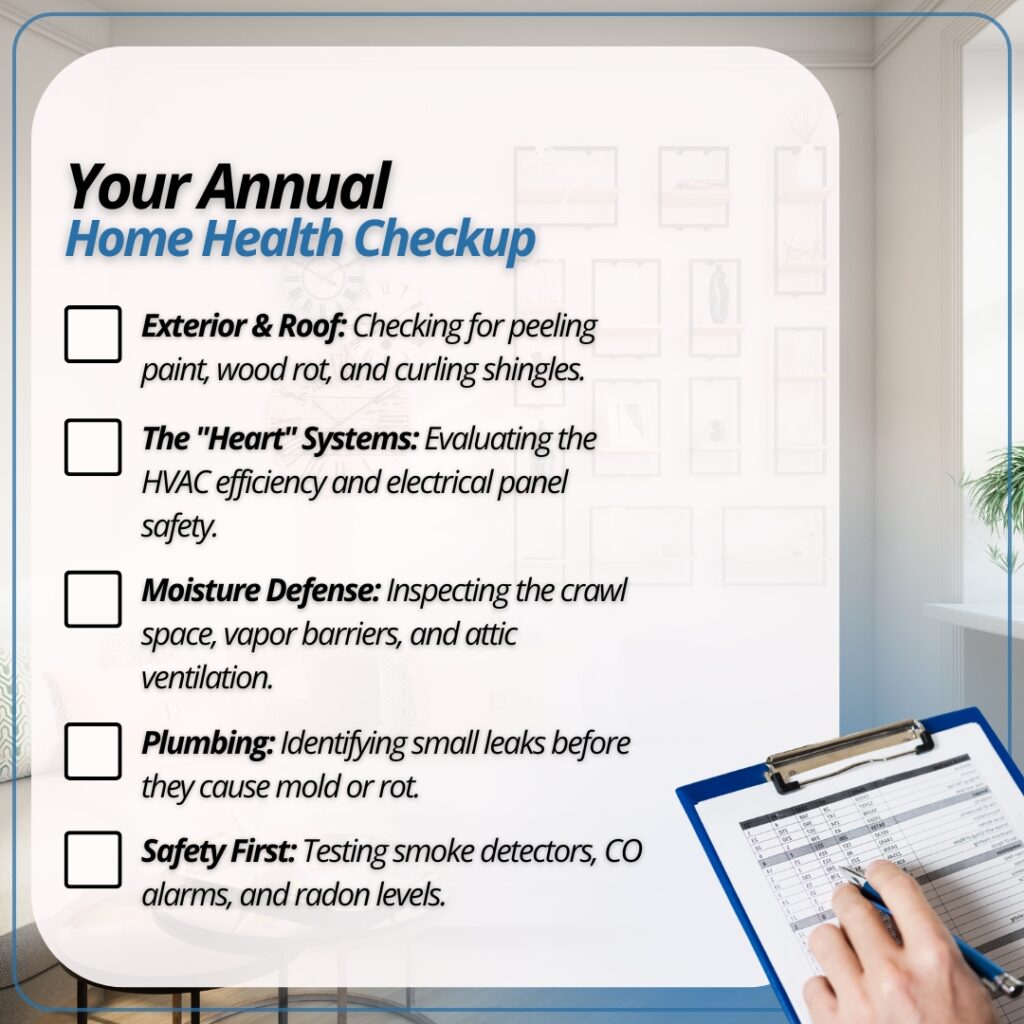
When a trained professional walks through your home, they look for things the average person might overlook. They check for peeling paint that could lead to wood rot or curling shingles that indicate your roof is nearing the end of its life. This yearly inspection gives you a roadmap for future maintenance, allowing you to plan your budget rather than reacting to emergencies.
The Financial Benefits of Regular Maintenance
The most obvious reason to schedule an annual inspection is to save money in the long run. According to the Pearl Certification 2026 Home Maintenance Annual Report, preventive maintenance can reduce overall repair costs by approximately 30%.
Most major problems start as small problems that are easy to fix. For example, a tiny leak under a water heater might only cost a few dollars to seal today. If left alone, that leak can lead to significant water damage and mold that costs thousands to remediate.
By staying on top of regular maintenance, you also preserve your home value. When you eventually decide to sell, you will have a history of care that appeals to potential buyers.
They will see that the property remains in good condition because you took the time to maintain it properly every year.
Based on 2026 industry cost data, the following table compares the manageable expense of early repairs found during an inspection against the high price of emergency failures.
| Potential Issue | Early Fix Cost (Average) | Cost of Major Repair (Delayed) |
| Roofing (Minor Leak) | $250 | $12,000+ (Full Replacement) |
| Plumbing (Small Leak) | $150 | $6,000+ (Water Damage/Mold) |
| Pests (Local Treatment) | $500 | $10,000+ (Structural Repair) |
| HVAC (Tune-up) | $100 | $7,000+ (New Unit) |
Protecting Your NC Home from Moisture and Humidity
In Central North Carolina, humidity is a constant battle. From Burlington to Durham, our homes are often subject to damp conditions that can cause structural issues. A yearly home inspection focuses heavily on areas where moisture hides, such as the attic, basement, or crawl space.
The home inspector will check your vapor barriers to ensure they are working properly to keep ground moisture away from your floor joists. They also look for proper ventilation in the attic.
Without enough airflow, heat and moisture can build up, leading to mold and damaging your insulation. Keeping these areas dry is vital for the health of your house and your family.
Evaluating Your HVAC and Electrical Systems
Your HVAC system and electrical systems are the heart of your home. In the Piedmont Triad, our cooling systems work incredibly hard during the humid summer months. An annual home inspection ensures that these systems are not showing signs of premature failure.
While a home inspector does not perform a deep mechanical tune-up, they check that the HVAC system is clean and that the air filters are being changed. They also examine the electrical panel for safety issues.
Identifying a loose wire or a faulty breaker can prevent a fire before it starts. This level of detail ensures your family is safe and your home remains energy efficient.
Safety First: Alarms and Environmental Hazards
Safety is a core part of any home inspection. A trained professional will test your carbon monoxide alarms and smoke detectors to ensure they are placed correctly and functioning. These devices are your first line of defense against invisible threats.
In areas like Chapel Hill and High Point, we also need to be aware of lead or radon. While these are often checked during a purchase, levels can change over time.
A yearly inspection reminds you to check these safety points. If your home has a well, like many properties in Davidson County or Randolph County, the inspector can also recommend water testing to ensure no contaminants have entered your supply.
Understanding the Inspection Report
After the conduct of the inspection, you will receive a digital inspection report. This is not just a list of what is wrong. It is a tool for your future. A good report includes photos and descriptions that explain the importance of each finding.
Q&A Home Inspections provides a written report that separates safety items from general maintenance. This helps homeowners prioritize what needs to be fixed immediately.
For instance, a safety issue with the electrical system takes priority over a recommendation for a new coat of paint on the interior trim.

Why You Should Accompany the Inspector
We always recommend that homeowners walk through the home with the home inspector. This is your chance to ask questions and learn about your house. You can find out where the main water shutoff is located or how to properly check your own air filters between visits.
Seeing the potential issues firsthand helps you understand the benefits of the inspection. It takes the mystery out of home care. When the inspector points out a gap in the windows or doors, you can see exactly how to fix it to save on your energy bills.
Other Related Questions
How often should homeowners test for radon gas?
Radon levels fluctuate as the ground shifts or as a home is sealed for energy efficiency. Testing is recommended every two years or after significant structural changes. Because Central North Carolina has areas with higher concentrations of this odorless gas, regular monitoring is the only way to ensure indoor air quality remains safe.
Is professional water testing necessary for homes on municipal systems?
While city water is treated, it can still absorb lead or copper from older plumbing inside the home. For properties in rural areas using private wells, annual water testing is vital to detect bacteria, nitrates, or heavy metals that are not filtered by standard city processes.
What are the primary signs of a failing crawl space?
High humidity in a crawl space often manifests as musty odors in the living area, sagging floors, or visible mold on floor joists. Professional crawl space inspections look for standing water, torn vapor barriers, and signs of wood-destroying insects that thrive in dark, damp environments.
At what stage of construction is a pre-drywall inspection performed?
A pre-drywall inspection occurs after the framing, plumbing, and electrical rough-ins are complete but before the insulation and drywall are installed. This allows an inspector to verify that the structural integrity and mechanical systems meet standards before they are hidden behind walls.
Does a pool and spa inspection include mechanical components?
Yes. A specialized assessment covers the functionality of pumps, heaters, and filtration systems, as well as the safety of electrical bonding and the integrity of the pool shell or liner. Regular checks prevent small leaks from becoming major structural failures or safety hazards.
When to Call a Professional
If you have not had an expert look at your home in the last 12 months, it is time to call a professional. You should also reach out if you notice signs of water damage, such as stains on the ceiling or a musty smell in the crawl space.
If your energy bills are rising, or if you see curling shingles on your roof, a maintenance inspection can pinpoint the cause.
For those in Alamance County and the surrounding Triad, Q&A Home Inspections is here to help. We understand the local climate and what it takes to keep a property in good condition year-round.
Conclusion
Your home is where your life happens. By prioritizing a yearly home inspection, you are choosing to be a proactive homeowner. You are protecting your investment, ensuring your family’s safety, and avoiding the stress of expensive repairs.
From checking the electrical outlets to evaluating the vapor barriers, every part of the inspection serves a purpose. Don’t wait for a major breakdown to occur. Take control of your home’s health today and enjoy the peace of mind that comes with knowing your house is safe and sound.
Reach out to Q&A Home Inspections today to schedule your annual home maintenance inspection. We are proud to serve our neighbors throughout Central North Carolina and look forward to helping you protect your home.