
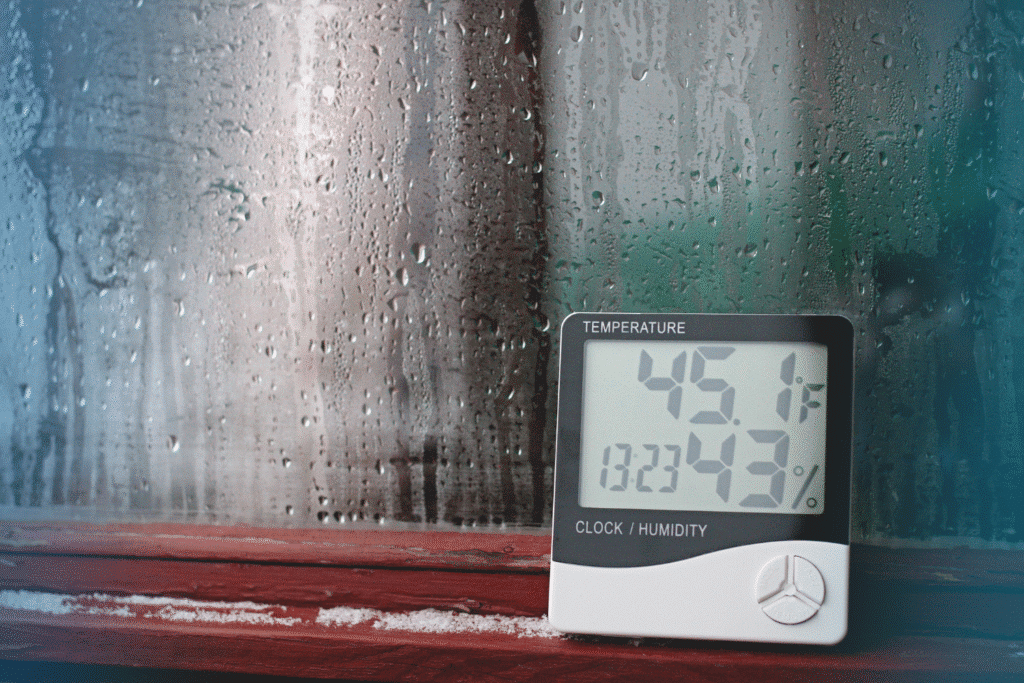
Ideal Basement Humidity Level & How to Maintain It
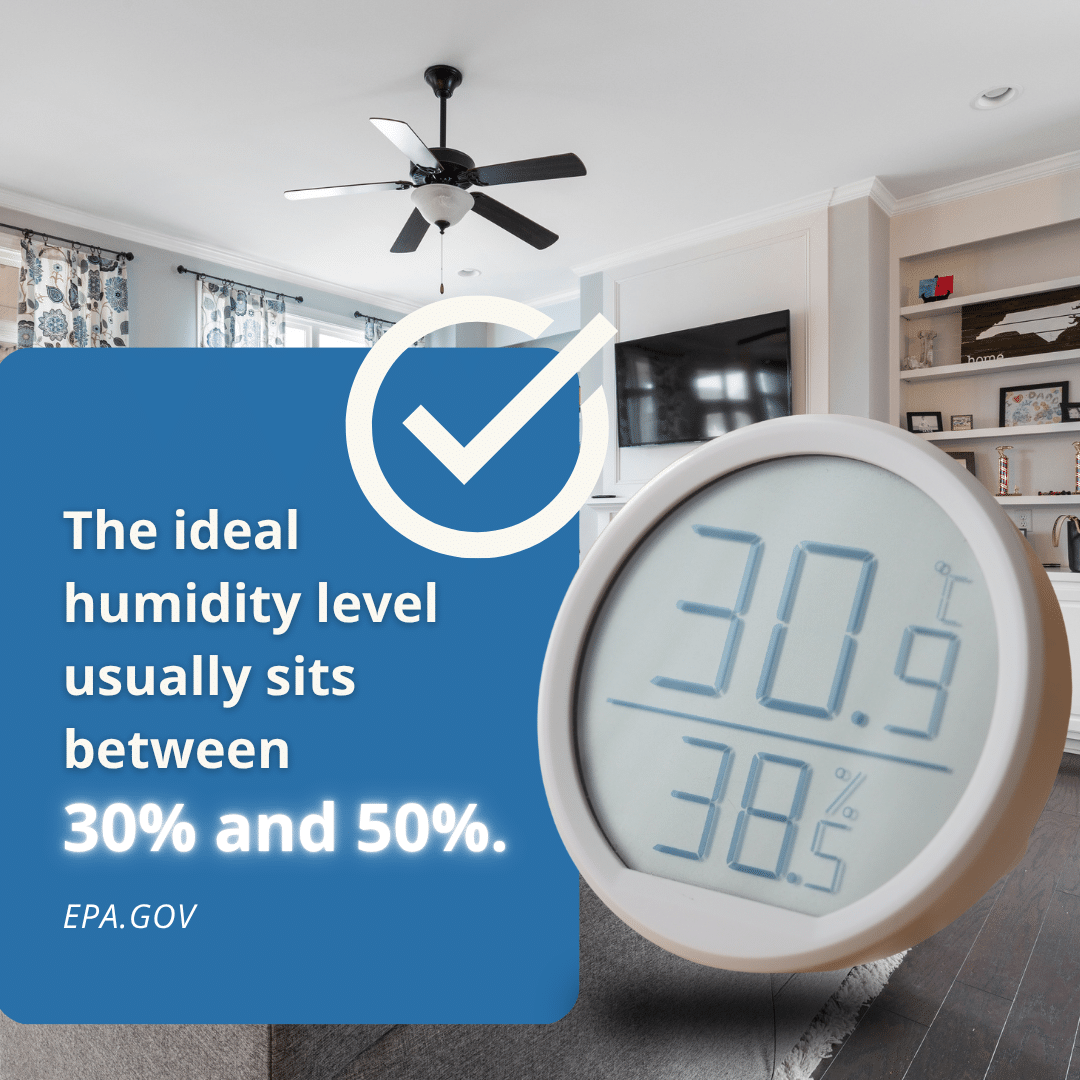
The ideal basement humidity level is between 30% and 50%. Go above that range and you’re feeding mold, mildew, and dust mites. Go below it and you risk cracked wood, peeling paint, and static shocks.
At Q&A Home Inspections, we see the effects of both extremes in basements across the Piedmont Triad every week. This guide covers what your number should be, how to measure it, and the dehumidifier settings that actually hold it steady through every season.
What Is the Ideal Basement Humidity Level?
The ideal basement humidity level sits between 30% and 50% relative humidity (RH) year-round. Push past 60%, and your basement crosses into mold-favorable territory. Drop below 30%, and dry air starts pulling moisture out of wood, paint, and even your skin.
|
Reading |
Status |
What it means |
|
Below 30% RH |
Too dry |
Cracking wood, static shocks, peeling paint |
|
30–50% RH |
Ideal |
Comfortable and safe for most basements |
|
50–60% RH |
Borderline |
Manageable short-term, worth monitoring closely |
|
Above 60% RH |
Too high |
Mold and dust mites become active within 24 to 48 hours |
The Environmental Protection Agency recommends keeping indoor relative humidity between 30% and 50% to prevent mold growth and protect indoor air quality. That guidance applies to basements just as much as the rest of the house, and arguably more, since basements sit closest to the soil and see the least airflow.
Why Basement Humidity Rises and Falls
Basement humidity changes for reasons tied to both the seasons and the house itself.
Common causes include:
- Poor ventilation: Closed vents or a weak HVAC connection let humid air sit and collect on cool surfaces.
- Leaky pipes or fixtures: Hidden leaks behind walls or under insulation create ideal mold conditions before anyone notices.
- Foundation cracks: Hairline cracks let groundwater seep through, especially after heavy rain, raising humidity as the water evaporates.
- Unsealed windows and doors: Warm, moist outdoor air enters and condenses on cooler basement surfaces.
- Groundwater pressure: Poor grading or landscaping that traps water against the foundation adds constant moisture pressure.
Weather plays a role too. Summer air holds more moisture, so basements feel damp even without a leak. Winter air is drier, which can push humidity too low if you’re not watching it. A routine home inspection often catches these contributing factors, leaks, poor grading, blocked vents, before they turn into a bigger moisture problem.
How to Measure Your Basement’s Humidity
You need a real number before you can fix anything. Measuring basement humidity takes one inexpensive tool and a few minutes.
- Buy a digital hygrometer. These run $12 to $20 and measure relative humidity directly.
- Place it in the center of the room, away from windows, vents, or the dehumidifier itself. Placing it too close to the unit will give you an artificially low reading.
- Check it daily for a week to spot trends rather than a single snapshot.
- Compare it to your dehumidifier’s built-in sensor. Most built-in sensors read 5 to 15 points lower than actual conditions, so trust the separate hygrometer if the two disagree.
If your basement stays above 50% after basic fixes, like sealing gaps or clearing vents, it may point to a hidden issue such as a foundation crack or a failing vapor barrier. That’s a good reason to schedule a mold inspection with a trained professional.
The Right Dehumidifier Setting, by Season
Your dehumidifier’s target should change with the season. Setting it once and forgetting it either wastes electricity or leaves your basement too damp.
Summer setting: 45–50%
Summer air carries the most moisture, so basements are most vulnerable now. Set your dehumidifier to 45% as a baseline. If humidity climbs past 55% during a heat wave, drop the setting to 40% or check whether the unit is sized correctly for the space.
Winter setting: 30–40%
Cold air holds far less moisture, so many basements swing toward too dry in winter. Reduce your setting by 10 to 15 points from your summer target. Below 60°F, most dehumidifiers lose efficiency, and below 41°F, the coils can freeze and shut the unit down entirely.
Spring and fall: 40–50%
Spring brings the highest seepage risk as snowmelt and rain saturate the soil around your foundation. Keep the dehumidifier in the 40–50% range and watch your hygrometer closely after storms. A humidity spike within 24 to 48 hours of rain, followed by a drop, usually points to seepage rather than simple condensation.
|
Season |
Target setting |
|
Summer |
45–50% RH |
|
Spring / Fall |
40–50% RH |
|
Winter (basement above 60°F) |
30–40% RH |
|
Winter (basement below 60°F) |
Scale back or turn off |
Choosing the Right Dehumidifier Size
The right setting won’t help if the unit itself is too small for the space. An undersized dehumidifier runs constantly without ever catching up.
|
Basement condition |
Square footage |
Recommended capacity |
|
Mildly damp |
Up to 500 sq ft |
30-pint unit |
|
Moderately damp |
500–1,000 sq ft |
40-pint unit |
|
Very damp/wet walls |
1,000–1,500 sq ft |
50-pint unit |
|
Actively seeping |
1,500–2,500 sq ft |
70-pint unit |
Capacity is rated in pints of water removed per 24 hours. If your unit runs nonstop and humidity still won’t drop, check the size first, then the moisture source. No dehumidifier, regardless of size, can outpace an active leak. Sealing foundation cracks and fixing drainage issues has to happen alongside dehumidifier use, not instead of it.
Signs Your Basement Humidity Is Too High or Too Low
Even without a hygrometer handy, your basement usually gives you warning signs first.
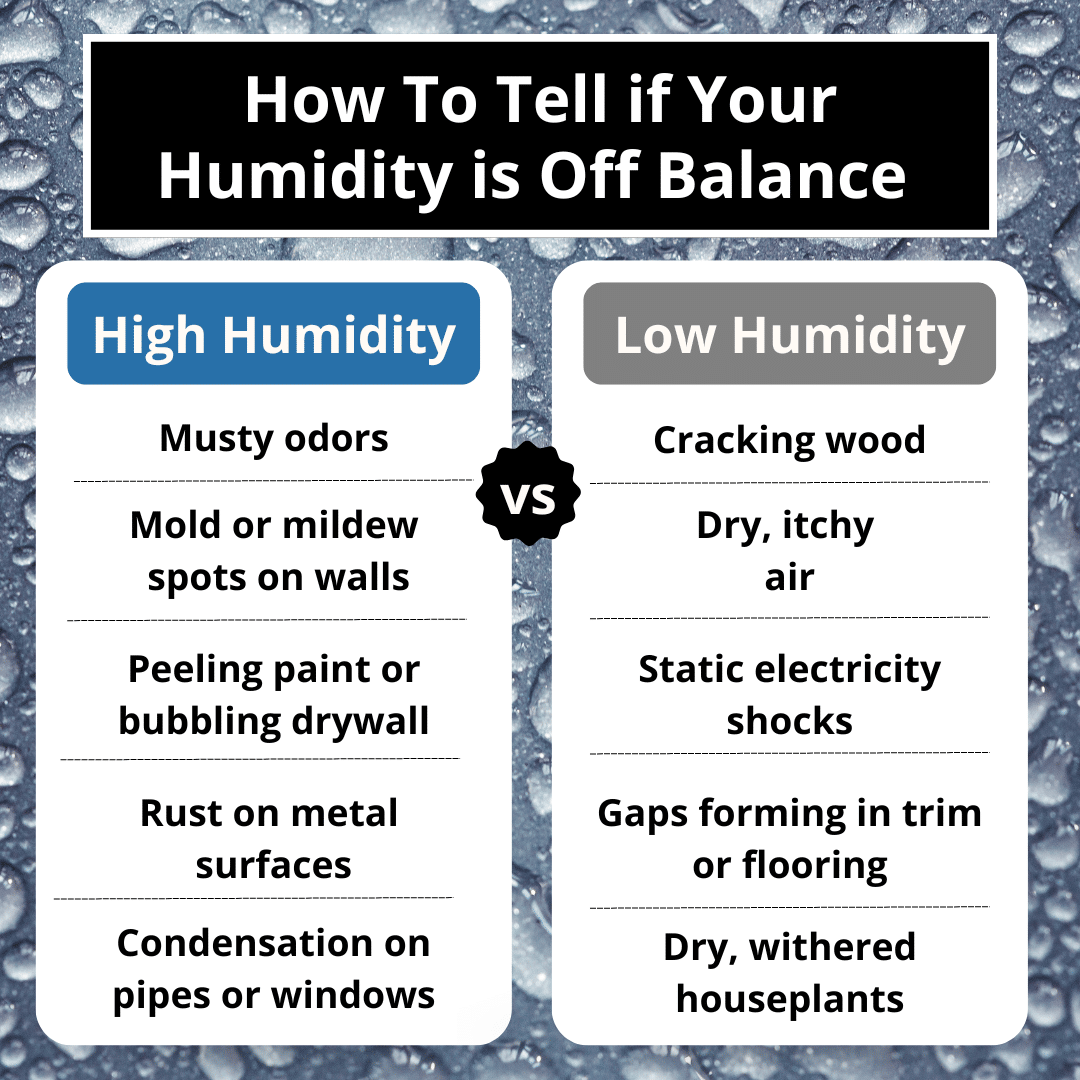
Signs of high humidity
- Musty or earthy odors, often the first sign before any visible mold
- Mold or mildew spots on walls, especially behind insulation or along baseboards
- Peeling paint or bubbling drywall
- Rust forming on stored tools or metal shelving
- Condensation on pipes, windows, or concrete walls
Left unchecked, excess moisture can trigger allergy and asthma symptoms and gradually weaken your foundation through repeated freeze-thaw cycles.
Signs of low humidity
- Wood floors, trim, or furniture cracking or splitting
- Frequent static shocks
- Dry, itchy air that’s uncomfortable to spend time in
- Widening gaps in flooring or trim
Low humidity causes slower, quieter damage than high humidity, but it still adds up over time and can strain your HVAC system as it works to compensate.
Long-Term Solutions for Humidity Control
Short-term fixes help, but chronic moisture problems usually call for a permanent solution:
- Waterproofing systems: Interior or exterior coatings block groundwater seepage.
- Vapor barriers: Plastic or foil layers behind walls stop moisture before it reaches living space.
- Sump pumps: Automatically clear water buildup around the foundation.
- French drains or improved grading: Redirect water away from the house before it ever reaches the basement walls.
These upgrades cost more upfront, but they protect the home for years. Before investing, it’s worth confirming the actual source of the moisture. A crawl space or basement inspection can pinpoint whether you’re dealing with seepage, condensation, or a plumbing leak, so the fix actually matches the problem.
How Home Inspectors Help Identify Moisture Issues
Home inspectors use tools that go beyond what a homeowner typically has on hand:
- Moisture meters measure water content inside walls and floors, not just the air.
- Infrared cameras spot hidden leaks and gaps in insulation.
- Air quality sensors detect mold spores that aren’t yet visible.
Per the InterNACHI Standards of Practice, a general home inspection covers visible moisture intrusion and its likely sources, which is why a certified inspection often catches basement humidity problems before they become expensive repairs. This is especially valuable when buying, selling, or remodeling a home with a finished or partially finished basement.
Related Questions to Explore
What should basement humidity be in winter vs. summer? Aim for roughly 30–40% in winter and 45–50% in summer. This seasonal swing accounts for how much moisture the outside air is already carrying.
Is 60% humidity too high for a basement? Yes. At 60% RH, conditions become favorable for mold and dust mites. The safe target stays below that threshold, with 45–50% as a practical working range.
Can high basement humidity cause mold upstairs? Yes. Moist air rises through the home, carrying mold spores and musty odors into upper floors if the basement isn’t kept in check. Our guide on mildew vs. mold breaks down how to tell the two apart.
Do I need a dehumidifier if my basement is unfinished? Yes. Even unfinished basements with exposed framing or drywall can trap enough moisture to cause structural damage over time.
What should I set my basement dehumidifier to? Start at 45% in summer and 30–40% in winter, then adjust based on what a separate hygrometer tells you, since built-in sensors often read low.
Should I run a dehumidifier in the basement in winter? If the basement stays above 60°F and humidity sits above 45–50%, yes. If it’s already below 40% and cold, running the unit wastes energy for no benefit.
When to Call a Professional
DIY fixes handle a lot of basement humidity problems, but not all of them. It’s time to call a professional if:
- Mold or mildew keeps returning after cleaning
- A properly sized dehumidifier still can’t bring humidity under control
- You notice foundation cracks or water stains
- The musty smell persists even after sealing and ventilation improvements
A trusted inspector from Q&A Home Inspections can pinpoint the actual source of the moisture, whether it’s seepage, a failing vapor barrier, or a ventilation gap, and recommend a fix that addresses the cause instead of just the symptom.
Conclusion
Keeping your basement’s humidity between 30% and 50% protects your home’s structure, air quality, and belongings. The keys are simple: measure with a real hygrometer, size and set your dehumidifier by season, and watch for the early warning signs before they turn into mold or structural damage.
If your basement feels damp, musty, or you’re just not sure where your numbers stand, contact Q&A Home Inspections to schedule a moisture assessment and get a clear picture of what’s happening in your home.