
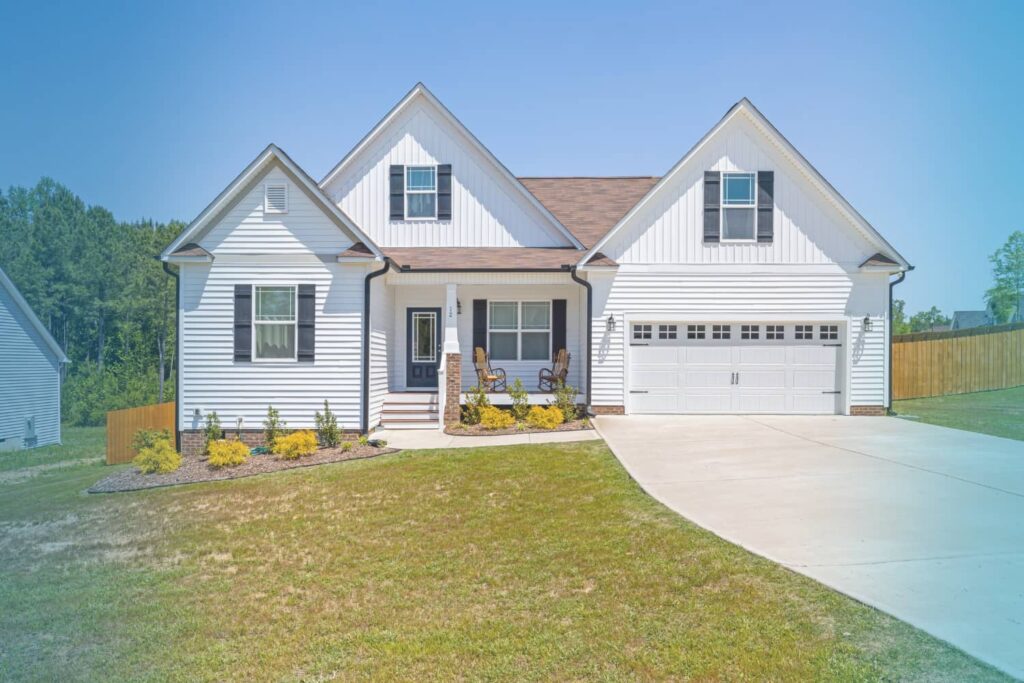
Why Do Brand-New Homes Still Need Inspections?
Yes, a brand-new home still needs an independent inspection, because new construction has defects just like any other home. A fresh build can hide missed framing connections, plumbing leaks, electrical mistakes, and drainage problems that the builder’s crew and the city code inspector did not catch.
Buyers often assume a new home is flawless, but the most expensive errors are the ones sealed behind drywall before anyone looks. Q&A Home Inspections inspects new construction across Greensboro and the Triad, a region seeing rapid new-build growth.
This guide explains whether you really need a new home inspection, the phases involved, what gets checked, and how the process works in North Carolina.
Do New Construction Homes Really Need an Inspection?
A new construction home needs an independent inspection because no one in the building process is working solely for you, the buyer. The crews, the project manager, and even the municipal inspector each have a narrow job, and none of them is checking the whole house on your behalf.
An independent inspector is the only set of eyes looking out for your interests alone.
This is also a strong North Carolina market for new homes. The Raleigh and Charlotte metros both rank among the country’s top areas for new-home construction, and NC continues to lead the nation in people moving in.
With so many new subdivisions going up quickly, independent inspections catch the shortcuts that fast building schedules can create.
Code Inspection vs. Builder QC vs. Your Independent Inspection
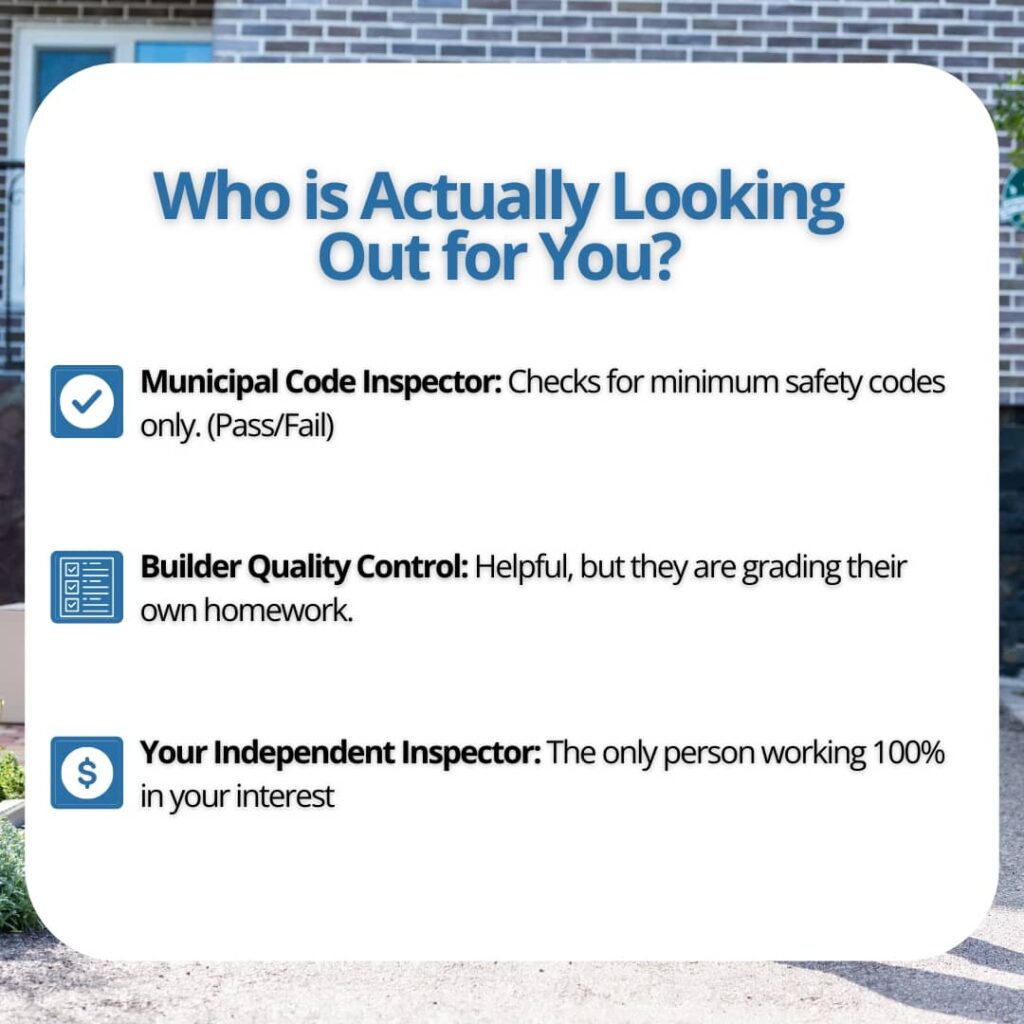
These three checks are easy to confuse, but they are not the same thing:
- Municipal code inspection: A city or county official confirms the home meets minimum building code. It is pass or fail on code items, not a detailed review of quality or function.
- Builder quality control: The builder’s own team checks its work. Helpful, but the builder is grading its own homework.
- Your independent inspection: A licensed inspector you hire evaluates the entire home in your interest and gives you a written report you can take to the builder.
If a builder discourages you from hiring your own inspector, treat that as a red flag rather than a reassurance.
The Phases of a New Home Inspection
A complete new home inspection happens in up to three phases, each timed to catch problems while they are still easy to fix. You do not always need all three, but each one looks at things that are hidden by the next stage of construction.
| Phase | When it happens | What it focuses on |
|---|---|---|
| Pre-pour / foundation | Before the foundation concrete is poured | Footings, reinforcement, grading, and drainage before they are buried |
| Pre-drywall | After framing and rough-ins, before insulation and drywall | Framing, plumbing, electrical, and HVAC rough-ins while still visible |
| Final / pre-closing | When the home is finished, before you close | The complete home, top to bottom, like a standard inspection |
The pre-drywall phase is the one buyers most often skip and most often regret, because once the walls are closed, framing and rough-in problems are sealed inside. Our pre-drywall inspection service is built for exactly this window.
Issues found at the framing stage, such as the structural cracking explained in this look at horizontal cracks in drywall, are far cheaper to fix before finishes go on.
What a New Home Inspection Covers
A new home inspection covers the same major systems as any home inspection, with extra attention to the workmanship issues common in fast-built construction. A thorough inspector evaluates:
- Structure: foundation, framing, and any signs of settling or poor connections.
- Roof and attic: shingles, flashing, ventilation, and insulation. Knowing the different types of roof shingles and their defects helps you understand the roof report.
- Plumbing: supply lines, drains, water heater, and fixtures for leaks or poor connections.
- Electrical: panel, wiring, outlets, and grounding.
- HVAC: heating and cooling operation and proper installation.
- Exterior and grading: siding, windows, doors, and drainage that slopes away from the foundation.
- Interior finishes: drywall, paint, flooring, and the cosmetic items that make up a punch list.
A good report does more than list defects. It explains what each finding means, the same way our walkthrough of what your home inspector sees that you don’t breaks down the systems most buyers overlook. New rural NC homes often add a septic system and well to the list, so understanding how a septic drainfield works can help if your build is outside city sewer service.
The 11-Month Warranty Inspection
The 11-month warranty inspection is an inspection scheduled near the end of your first year, before the builder’s one-year workmanship warranty expires. Most builders offer a one-year warranty on general workmanship, with longer coverage on some systems.
Timing the inspection at about month eleven gives you a documented list of issues to submit while the builder is still responsible for fixing them.
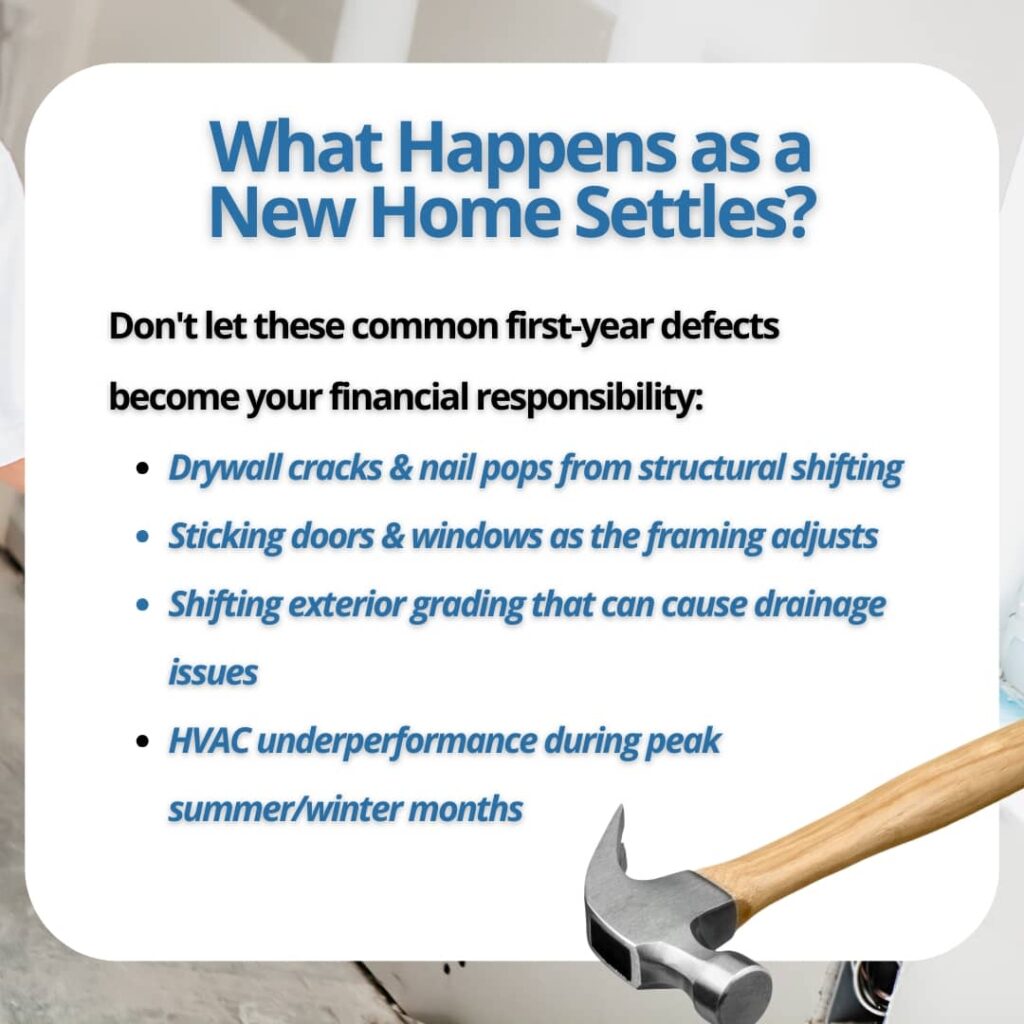
In that first year, a new home settles, and problems that were invisible at closing often appear: nail pops, drywall cracks, sticking doors, grading that has shifted, or HVAC that underperforms in a full season.
An inspector documents each item with photos so you can hand the builder a clear, professional report rather than a vague complaint list. This single inspection often pays for itself in covered repairs, which is why it is one of the most valuable and most overlooked steps for new-home owners.
What It Costs and When to Schedule in NC
A new home inspection in North Carolina typically runs a few hundred dollars per phase, and you should schedule each phase as soon as you know the construction timeline. Costs vary by inspector, home size, and how many phases you choose.
As a general guide, a pre-drywall inspection often runs around $100 to $400, and a final or 11-month inspection commonly runs $250 to $350, with all-phase packages costing more.
North Carolina licenses home inspectors through the Home Inspector Licensure Board under the Office of State Fire Marshal, and inspectors must meet training and continuing-education requirements.
You can confirm any inspector’s license through the NC Home Inspector Licensure Board. For a deeper look at the value of independent new-construction inspections, the national association InterNACHI also publishes a new construction inspection resource.
To schedule and coordinate with your builder early. Ask for the framing completion date so you can book the pre-drywall inspection before insulation goes in, and put a reminder on your calendar for month eleven.
Related Questions to Explore
Do new construction homes need a home inspection?
Yes. New homes have defects like any other home, and the people building it are not working solely for you. An independent inspection is the only review done entirely in the buyer’s interest. It catches issues the builder’s crew and the city code inspector can miss.
What is a pre-drywall inspection and why does it matter?
A pre-drywall inspection happens after framing and rough-ins but before insulation and drywall go up, while the home’s structure, plumbing, electrical, and HVAC are still visible. It matters because once the walls are closed, these systems are hidden, and fixing them later is far more expensive.
Isn’t the builder’s inspection or city code inspection enough?
No. The city code inspection only confirms minimum code compliance, and the builder’s own checks are the builder grading its own work. Neither is a detailed, buyer-focused review of the whole home, which is what an independent inspection provides.
What is an 11-month warranty inspection?
It is an inspection done near the end of your first year of ownership, before the builder’s one-year workmanship warranty expires. It documents problems that appeared as the home settled so you can submit them to the builder while they are still covered.
How much does a new construction home inspection cost?
It usually costs a few hundred dollars per phase in North Carolina, with pre-drywall often around $100 to $400 and a final or 11-month inspection commonly $250 to $350. Exact pricing depends on the inspector, home size, and number of phases.
When to Call a Professional
Call a licensed home inspector as soon as you go under contract on a new build, not after closing. Booking early lets you line up the pre-drywall inspection before the walls close and the final inspection before you sign.
If you have already moved in, schedule the 11-month inspection well before your first anniversary so there is time to report covered items.
Q&A Home Inspections is an InterNACHI-certified, veteran-owned company serving Greensboro and the entire Triad, including Davidson and Randolph counties. We inspect new construction at every phase and back our work with the InterNACHI guarantee.
To get started, learn about our home inspection services or check the areas we serve and reach out.
Conclusion
A brand-new home is a major purchase, and an independent inspection protects it. Keep these takeaways in mind:
- New homes have defects, and only an independent inspector works solely for you.
- The pre-drywall phase catches problems before they are sealed behind walls.
- The 11-month warranty inspection lets you fix issues on the builder’s dime.
If you are buying new construction in central North Carolina, schedule your inspections early. Reach out to Q&A Home Inspections, and we will help you build a phase plan. Protect your investment from foundation to final walk-through.