
Why Do NC Buyers Need a Pre-Purchase Home Inspection?
A pre-purchase home inspection gives you an independent, professional look at the true condition of a home before you’re legally committed to buying it. For buyers in North Carolina, it’s one of the most valuable steps in the due diligence period.
This post covers what the inspection includes, what inspectors commonly find in NC homes, how to use the report in negotiations, and what to expect from the process, start to finish.
What Is a Pre-Purchase Home Inspection?
A pre-purchase home inspection is a visual examination of a home’s structure and systems, performed by a licensed inspector before the buyer closes on the property.
The inspector walks through the home and documents the condition of the roof, foundation, plumbing, electrical, HVAC, insulation, and more.
The report is yours. It’s not a pass/fail grade on the house. Inspectors document what they find, not whether the home is acceptable. Every home, new or older, will have findings.
The goal is to know what you’re buying before you own it.
How Is It Different from an Appraisal?
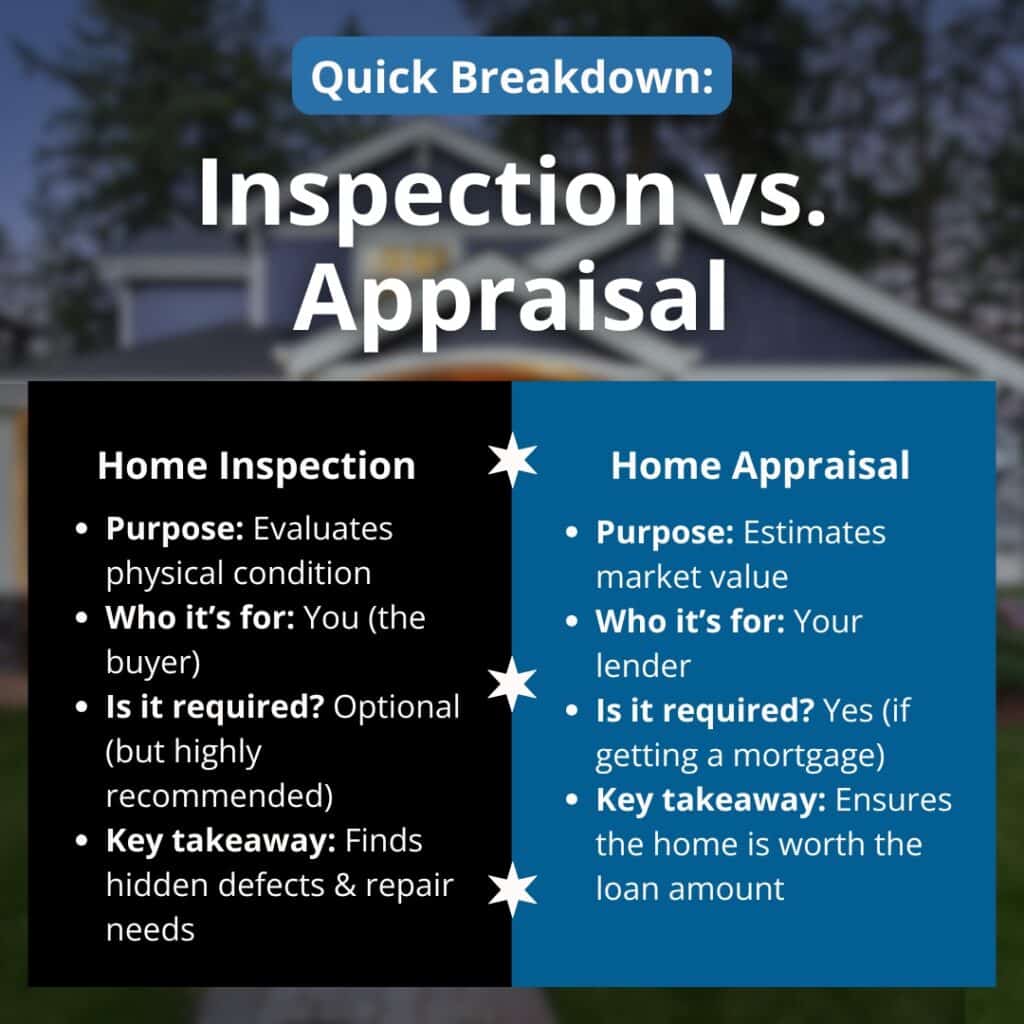
These two are often confused. An appraisal estimates the home’s market value for your lender. A home inspection evaluates its physical condition for you. Your lender requires the appraisal.
The inspection is your choice. Skipping it is one of the most common regrets among buyers who faced unexpected repair costs after closing.
What Does a Home Inspector Check?
A licensed NC home inspector covers these major systems and components:
- Roof and gutters: Shingle condition, flashing, drainage
- Foundation and structure: Visible cracks, settling, structural framing
- Electrical: Panel condition, wiring, GFCI/AFCI outlets, visible hazards
- Plumbing: Supply lines, drain lines, water heater, visible leaks
- HVAC: Heating and cooling equipment, filters, visible ductwork
- Attic: Insulation, ventilation, signs of moisture or pest activity
- Crawl space: Moisture barriers, wood rot, vapor barriers, structural members
- Windows and doors: Operation, sealing, visible damage
- Garage and exterior: Grading, drainage, walkways, and siding condition
A general home inspection does not cover radon testing, mold testing, termite/WDO inspections, sewer scopes, or pool equipment unless these are ordered as separate services.
Benefits of Getting a Pre-Purchase Inspection
Getting an inspection before you close on a home protects you in three concrete ways.
1. You learn what repairs are needed before you own them. An inspection report gives you an itemized picture of the home’s condition. Some findings are minor. Others, like a failing HVAC system, an aging electrical panel, or active crawl space moisture issues, can cost thousands to address. Look into signs of moisture in a crawl space as an example of what inspectors commonly flag in NC homes. Knowing before you close means you can negotiate, budget, or walk away.
2. You gain negotiation leverage. Buyers commonly use inspection findings to request repairs, a price reduction, or a seller credit at closing. Not every seller will negotiate, but you have no leverage without documented findings.
3. You make an informed decision. If the findings reveal problems beyond your budget or risk tolerance, you have the information you need to exit the contract during the due diligence period.
Pre-Purchase Inspections in North Carolina: What Buyers Need to Know
North Carolina’s real estate transaction structure is different from most states, and it directly affects how your home inspection works.
The NC Due Diligence Period
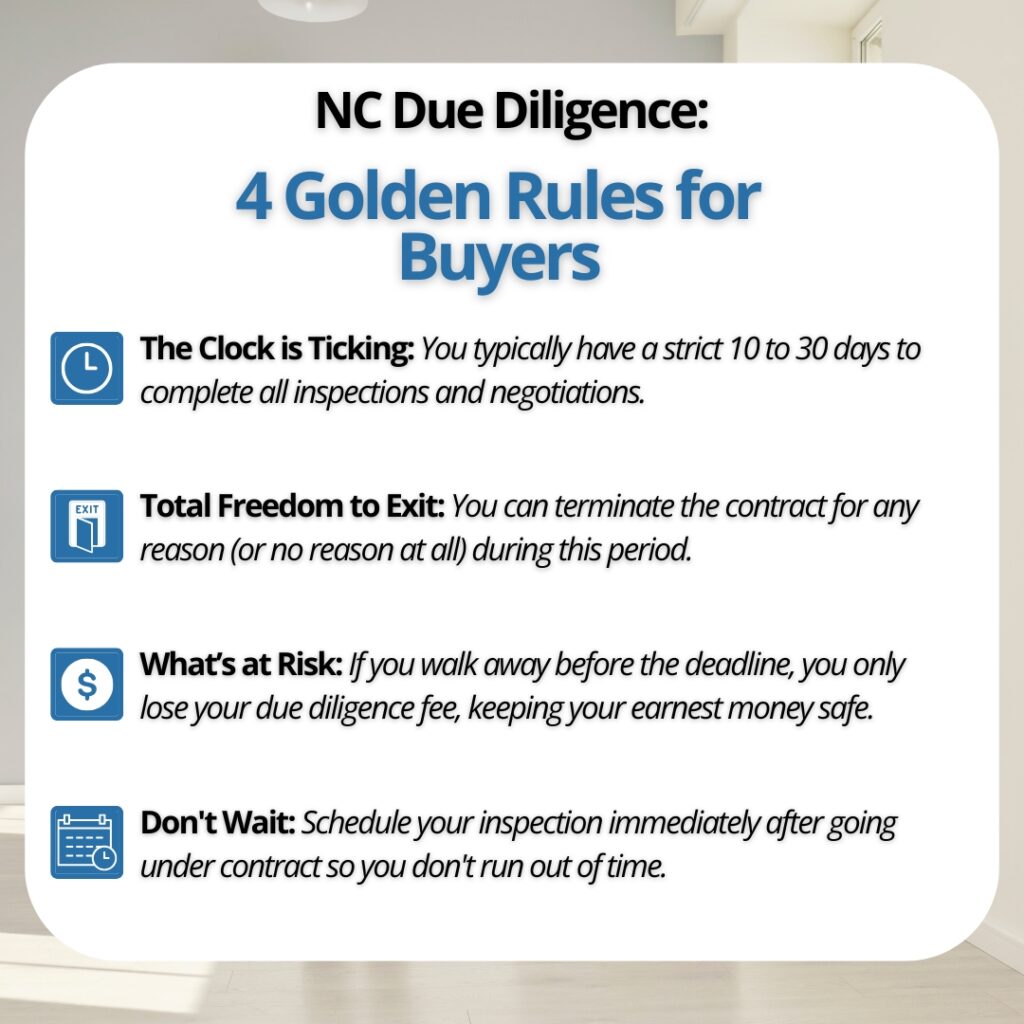
NC does not use a traditional inspection contingency. Instead, buyers and sellers agree to a due diligence period, typically 10 to 30 days. During this period, you can terminate the contract for any reason and recover your earnest money.
You only lose the due diligence fee, which is paid directly to the seller.
Your home inspection must happen during this window. Schedule it as early as possible after going under contract. Running short on time can leave you without a complete picture before your exit right expires.
The NC Real Estate Commission advises buyers to get their own independent inspection during due diligence. NC brokers are also prohibited from discouraging buyers from hiring an inspector.
NC Inspector Licensing
Home inspectors in NC must hold a license issued by the NC Home Inspector Licensure Board (HILB). Ask to see your inspector’s license number before booking and verify the license is active on the HILB website.
What NC’s Climate Means for Your Inspection
North Carolina homes face specific stress from the region’s climate. High humidity fuels moisture in crawl spaces, wood rot in structural members, and mold growth in areas you can’t easily see. Summer storms put roofs and gutters under repeated pressure.
Older homes in markets like Greensboro, Charlotte, and Raleigh often have cast-iron drain lines, older electrical panels, or inadequate attic ventilation.
In the NC Piedmont and western foothills, radon levels are worth testing for separately. Radon is a naturally occurring gas that enters homes through foundation gaps and is the second leading cause of lung cancer in the United States.
Common Issues Found During NC Home Inspections
These are the findings that appear most often in inspections across central North Carolina:
- Crawl space moisture and vapor barrier problems. NC’s humid climate pushes moisture under crawl space foundations. Without proper vapor barriers and ventilation, wood rot and mold follow. This is one of the most common major findings in NC inspections.
- Roof wear and storm damage. Asphalt shingles have a 20 to 30-year lifespan. Many homes in the Greensboro and Triad markets were built in the 1980s and 1990s, putting roofs at or near end of life. Granule loss, damaged flashing, and improper drainage are common findings.
- Termite and wood-destroying insect damage. NC is a high-pressure state for termites. Common termite signs include shelter tubes along foundation walls, damaged wood framing, and frass deposits. A WDO inspection is a separate add-on from a licensed pest inspector, but a home inspector will note any visible signs.
- Electrical panel and wiring concerns. Older homes sometimes have Federal Pacific or Zinsco panels, both of which have documented safety issues. Knob-and-tube wiring and aluminum wiring from earlier decades also appear in NC’s older housing stock.
- HVAC age and performance. Central NC’s heat and humidity put heavy loads on cooling systems. Inspectors check unit age, condition, and basic function. A unit over 15 years old that has not been serviced recently is a budget item to plan for.
Related Questions to Explore
Are radon testing and mold testing included in a standard home inspection?
No. A standard real estate inspection focuses on the visible structure and mechanical systems of the home, but it does not cover environmental hazards. Buyers should opt for separate radon inspection and mold testing services to ensure indoor air quality is safe, especially in homes with finished basements or past water issues.
When is a specialized crawl space inspection necessary?
While a general inspector will look for obvious foundation flaws, a dedicated crawl space inspection provides a deeper diagnostic look at moisture levels, structural framing integrity, and the condition of the vapor barrier. Given North Carolina’s high humidity, this targeted evaluation is critical for homes built on pier or crawl space foundations.
Do North Carolina home buyers need a separate pest inspection?
Yes. North Carolina is a high-pressure state for wood-destroying insects. A general home inspection only flags visible, easily accessible damage, meaning a specialized pest inspection is required to thoroughly evaluate the property for active termite colonies, powderpost beetles, or hidden structural infestations.
Is water testing necessary when purchasing a home?
Standard inspections do not evaluate the safety or quality of a home’s water supply. If you are purchasing a property with a private well, or if you have concerns about older municipal plumbing systems, scheduling a specialized water testing service is the only way to detect harmful bacteria, lead, and chemical contaminants.
When to Call a Professional
If you’re under contract on a home in central North Carolina, schedule your inspection now, before your due diligence period runs out. Your inspection window is fixed, and it cannot be extended without renegotiating the contract.
Contact a licensed inspector if:
- You’re buying any residential property, new or existing
- Your agent or seller suggests skipping the inspection in a competitive market
- You received a pre-listing inspection from the seller and want your own independent assessment
- You’re buying newly built construction (new construction inspections catch builder errors before closing)
Q&A Home Inspections is an InterNACHI-certified, veteran-owned inspection company serving Greensboro and central North Carolina. Our inspectors carry NC licenses and are backed by InterNACHI’s Buy-Back Guarantee. Schedule your real estate inspection online or call us.
Conclusion
A pre-purchase home inspection gives you one thing you can’t get anywhere else: an independent, expert look at the condition of the home you’re about to buy. In North Carolina, with its unique due diligence period and regional climate conditions, that information is especially valuable.
Three things to take away before you close:
- Schedule the inspection early in your due diligence period, not at the last minute.
- Attend in person so you can ask questions as findings come up.
- Use the report to negotiate, budget, or decide whether to proceed.
Ready to schedule? Q&A Home Inspections serves the Greensboro area and central NC. Contact us to book your pre-purchase home inspection today and go into closing with a clear picture of what you’re buying.