
Should You Encapsulate Your North Carolina Crawl Space?
North Carolina homeowners know that summer humidity is no joke. When the air gets heavy in the Piedmont, that moisture often settles in the lowest parts of your house.
You might notice faint musty odors or feel a slight dampness in your hardwood floors. This leads many people to ask if crawl space encapsulation is the right move for their property.
As home inspectors, we see thousands of crawl spaces across Raleigh, Durham, and the surrounding areas. We do not sell encapsulation services, so we can provide a clear look at whether this investment actually makes sense for your specific home.
An Inspector’s Take on Under-Home Care
When you start researching how to handle a damp crawl space, you will find many different opinions. Most of the information online comes from companies that install these systems. While those experts know their products, they are in the business of selling a specific solution.
As home inspectors, we look at your house through a different lens. We are not there to sell you a product. We are there to give you an objective look at the health of your foundation and the structural integrity of your home.
At Q&A Home Inspections, our perspective comes from what we see during our daily rounds in Central North Carolina. We look for the reason behind the moisture. If we find high humidity or wood rot, we document it in your inspection report because it is a physical reality of the house.
Inspector Insight: We want you to have a dry, safe foundation, but every house is unique. Our goal is to provide facts so you can choose the right level of care without feeling pressured by a sales pitch.
What Exactly is Crawl Space Encapsulation?
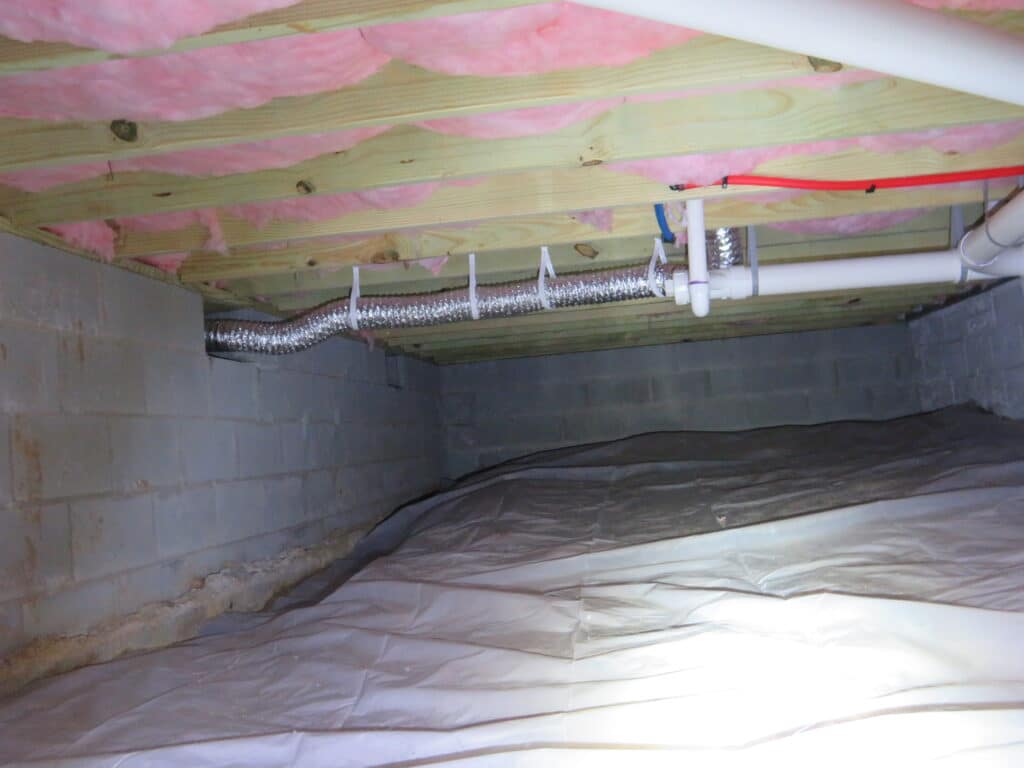
Crawl space encapsulation is a process where a heavy-duty plastic vapor barrier covers the floor and the crawl space walls. The seams are sealed with industrial tape, and the vents to the outside are usually closed off. This turns the crawl space into a conditioned area. This means the space stays closer to the temperature and humidity of your living room.
During the process, installers may also seal small cracks in masonry or concrete block walls to prevent outside air from leaking in. Many of these systems also include a dedicated dehumidifier to keep moisture at a set level, usually below 50 or 55 percent. This stops the humid North Carolina air from flowing freely under your house. While it sounds like a perfect fix, space encapsulation is a major change to how your home handles air.
Improving Air Quality and Efficiency at Home
One of the main reasons people consider this project is to improve air quality. In many homes, air from the crawl space can move upward into the living areas.
If that crawl space is damp, it can carry mold spores and musty odors with it. By sealing the area, you are effectively protecting the indoor air you breathe every day.
Beyond the air you breathe, there is the factor of energy efficiency. Encapsulation helps maintain consistent indoor temperatures by preventing conditioned air from escaping.
- Lower Bills: Homes with an encapsulated crawl space can sometimes save 15 percent or more on yearly heating and cooling costs.
- Less Strain: Your air conditioning and heating systems do not have to work as hard to fight extreme humidity.
- Healthier Living: A properly sealed space reduces the entry of allergens and pollutants.
The Inspection Report: What We Look For
When we perform a crawl space inspection, we document specific data points for your official report. We measure the wood moisture content in your floor joists. In North Carolina, we like to see these numbers stay below 16 percent.
An encapsulated crawl space changes what shows up on a home inspection report. For a buyer, a well-maintained, sealed system can be a major plus. It shows that the owner has taken active steps to protect the home’s structure. However, if the system is failing, the report will highlight issues like:
- Standing water behind the plastic liner
- A non-working or poorly maintained dehumidifier
- Fungal growth (the technical term for mold or mildew growth)
- Buckling or peeling tape at the seams
Why North Carolina Soil Matters
The red clay soil in our part of the state holds onto water for a long time. After a heavy rain in the Triangle, that moisture stays in the ground for days. When the sun comes out and the temperature rises, that ground vapor tries to move upward through the floor of your crawl space. If your home has an old, thin plastic sheet or bare dirt, that water vapor ends up on your wood framing.
High humidity leads to several issues that we regularly flag during inspections:
- Wood Rot: Moisture softens your floor joists over time, leading to costly repairs.
- Pest Infestations: Termites and roaches love damp, dark environments.
- Efflorescence: White powdery salt deposits on your brick foundation walls.
- Mildew: Growth on organic materials like wood and paper insulation.
When Space Encapsulation Is the Right Move
Whether crawl space encapsulation depends on your specific goals and the home’s current state. It makes the most sense when a home has chronic moisture problems that simple fixes cannot solve.
If your crawl space stays damp even during a dry spell, or if you have recurring mold issues, sealing the space might be the best long-term path.
It is also a good choice for homeowners who want the highest level of protection. If you plan to stay in your North Carolina home for many years, the cost of the system provides peace of mind.
It can help stabilize the wood in your floor system. This prevents the wood from expanding and contracting, which can sometimes reduce cracks in your drywall.
When Installing Vapor Barriers Is Enough
Not every home in the Piedmont needs a fully sealed crawl space. If your crawl space is currently dry, has no mold, and the wood moisture levels are low, your current setup is working fine. Many homes do perfectly well with a high-quality vapor barrier and good exterior drainage.
Comparison at a Glance:
|
Feature |
Standard Vapor Barrier | Full Encapsulation |
|
Average Cost |
$1,500 – $3,500 |
$5,500 – $15,000+ |
|
Main Benefit |
Stops ground vapor |
Total moisture control |
|
Maintenance |
Very Low |
Yearly (Dehumidifier) |
|
Best For |
Dry crawl spaces |
Chronic moisture issues |
Critical Repairs Before You Seal
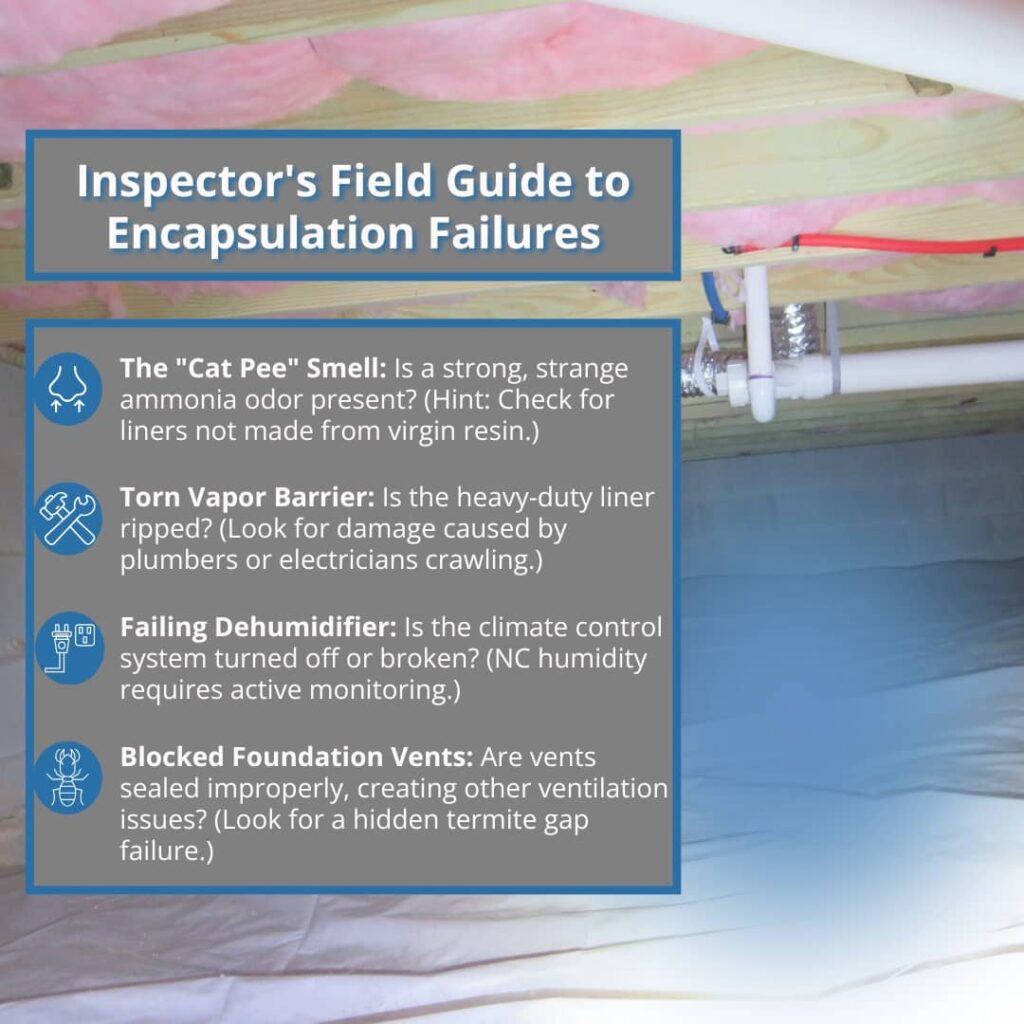
This is the most important piece of advice an inspector can give you. Encapsulation is not a fix for standing water. If you have a plumbing leak or a drainage problem, sealing the crawl space will make things worse. You would essentially be trapping water inside a plastic bag under your house.
Before you ever sign a contract for encapsulation, you must handle these items:
- Gutters: Clean them and extend downspouts at least six feet away.
- Grading: Ensure the ground slopes away from your foundation.
- Plumbing: Repair any leaks in the kitchen or bathrooms above.
- Sump Pump: Consider installing one if your crawl space is prone to flooding during storms.
Common Red Flags in Existing Systems
Because we inspect homes that are being sold, we see how these systems hold up over time. We often find issues with professional installs that a homeowner might miss.
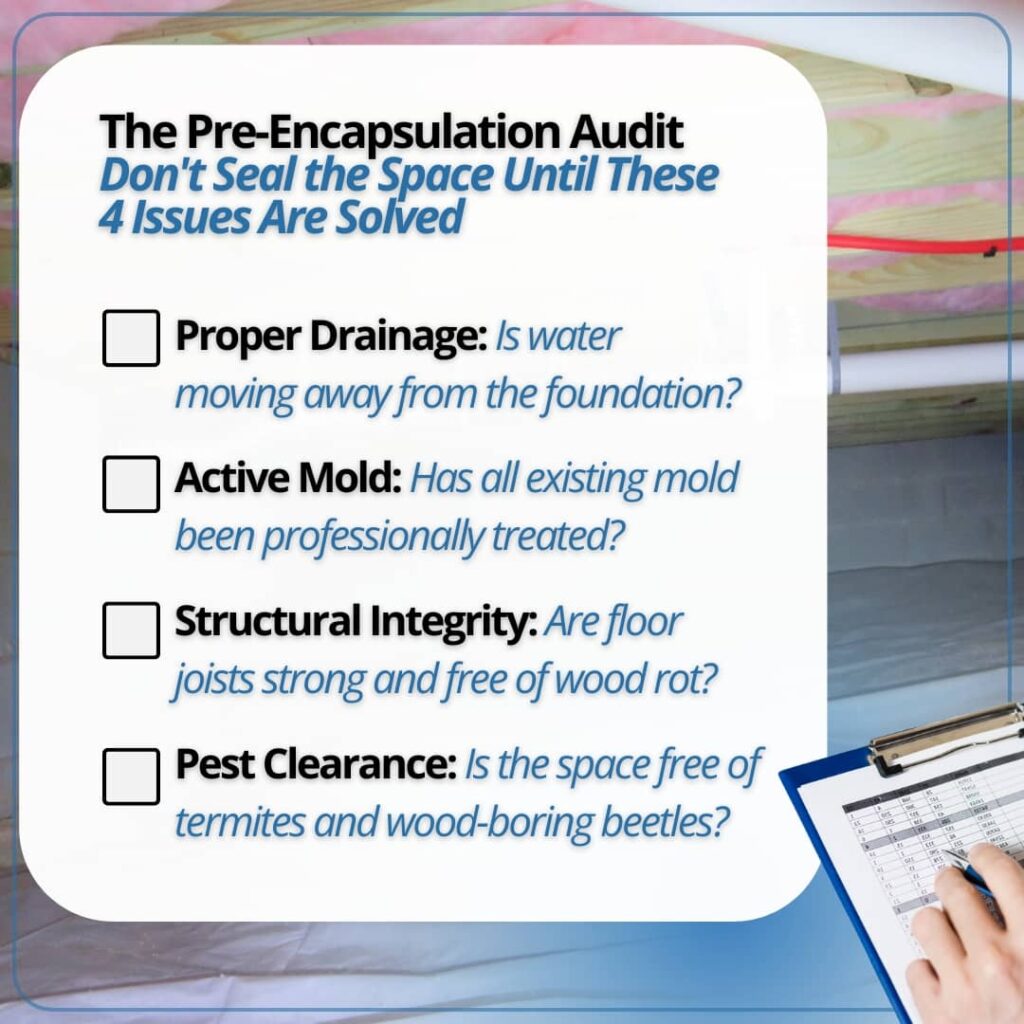
- Torn Barriers: Damage from cable installers or plumbers crawling over the plastic.
- Clogged Filters: Dehumidifiers that can no longer pull moisture out of the air.
- Missing Strips: “Termite inspection strips” are gaps in the plastic required by law so inspectors can see the foundation.
- Trapped Water: Moisture is sitting behind the plastic on the foundation walls because exterior drainage failed.
Related Questions
How does moisture affect a pest inspection?
High moisture levels create the perfect environment for wood-destroying insects. Pest infestations are much more likely to be found in damp wood. Keeping your crawl space dry is a major part of preventing pest damage and protecting your home’s structure.
Is mold testing necessary before encapsulation?
If we find visible growth during an inspection, we often recommend mold testing. You need to know exactly what is growing before you seal it in. Cleaning the wood and removing mold spores before installing plastic is vital for a healthy home.
Should I test for radon if I seal my crawl space?
Radon is a gas that comes from the soil. When you seal a crawl space, you change the way air and gas move. It is very important to run a radon test after any major crawl space renovation to make sure your indoor air quality stays safe.
Can water testing find leaks under the house?
While a water quality test looks at what is in your drinking water, we also check for the presence of water where it should not be. If we see standing water in a crawl space, we often look for plumbing leaks or drainage issues that could lead to wood rot.
When to Call a Professional
If you are unsure about the health of your crawl space, start with a professional inspection. You do not want to guess when it comes to your foundation. A home inspector provides a neutral assessment of your moisture levels and the condition of your wood.
If we find moisture problems or mildew growth, we will put it in writing. If your crawl space looks great and just needs a few gutter adjustments, we will tell you that, too.
Our job is to give you the facts so you can make a smart choice for your home. Whether you are buying a home or just worried about a musty smell, an inspection is the best first step.
Conclusion
Crawl space encapsulation is a great tool for the right North Carolina home, but it is not a one-size-fits-all solution. It can provide a dry and stable environment, but it comes with a higher cost and requires ongoing maintenance.
For many homes in our area, simple drainage fixes and a fresh vapor barrier are enough to keep the structure healthy for decades.
If you have questions about your foundation, mold, or moisture, reach out to us at Q&A Home Inspections. We serve Central North Carolina and are happy to help you understand what is really going on under your house. Our goal is to provide the clarity you need to protect your investment.