
What Is the Best Basement Dehumidifier Setting?
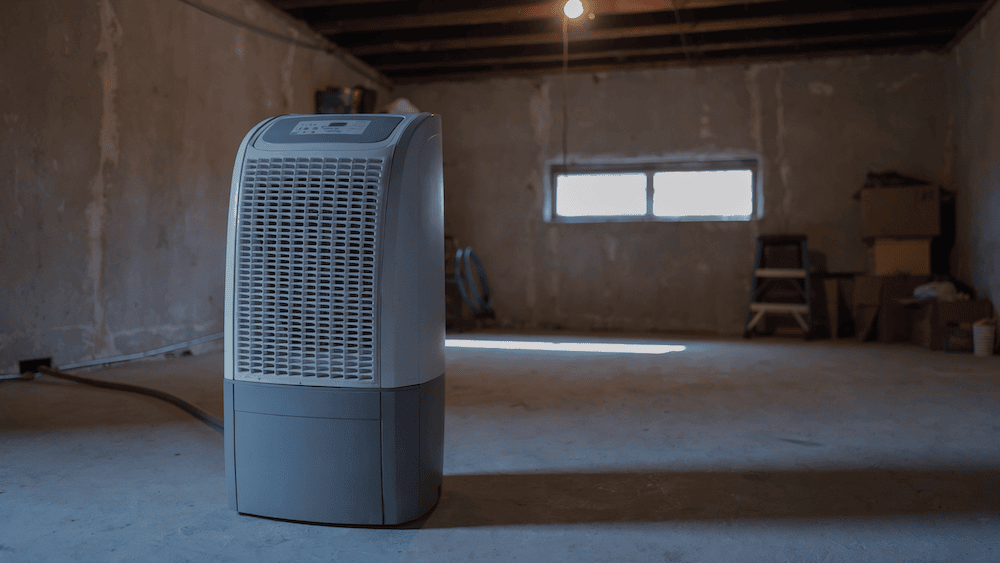
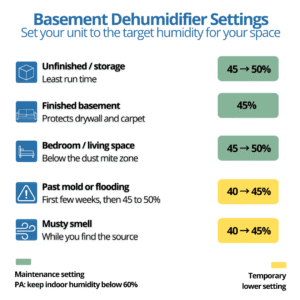
Set your basement dehumidifier to 45% to 50% relative humidity. That range keeps mold, mildew, and musty odors in check without running the machine harder than it needs to. If your basement is finished, damp, or has had mold before, start a little lower, at 40% to 45%, for the first few weeks.
At Q&A Home Inspections, we check basements across the Triad and Central North Carolina, and a dehumidifier set to the wrong number is one of the most common moisture mistakes we see. Below, we cover what the number on the dial means, the right setting for your season and basement type, and what to do when your unit can’t keep up.
What Does the Setting on a Dehumidifier Mean?
The number you choose is a target humidity level, not a power level. Most dehumidifiers have a built-in humidistat, a sensor that reads the air’s relative humidity (RH). When the reading climbs above your target, the compressor turns on. When the reading drops to your target, the unit shuts off or runs only the fan.
This is why setting it to 30% doesn’t make it work “better.” It only makes the unit run longer, sometimes nonstop, pulling out moisture your basement didn’t need removed. Setting it to 60% has the opposite problem. The unit waits until the air is already in the range where mold likes to grow.
Relative humidity measures how much water vapor the air holds compared with the most it could hold at that temperature. That’s why the same basement can read 45% on a cool morning and 60% on a muggy afternoon with no new water coming in.
Many units also have a “continuous” mode that ignores the setting and runs nonstop. It’s handy for drying out after a leak or flood. It’s not a mode to leave on day to day.
The Best Basement Dehumidifier Setting for Most Homes
For most basements, 45% to 50% RH is the sweet spot. The EPA recommends keeping indoor humidity below 60%, ideally between 30% and 50%. Basements run cooler and damper than the rest of the house, so aiming for the upper part of that range protects the space without wasting electricity.
Why not lower? Settings below 40% cost more to run and rarely add protection. Air that dry can also shrink wood framing, stair treads, and stored furniture.
Why not higher? When basement air stays above 50% for long stretches, dust mites multiply and cool surfaces like block walls and cold water pipes start to sweat. Above 60%, mold growth gets much more likely.
For more on the humidity range itself and how it shifts through the year, see our guide to ideal basement humidity levels.
Dehumidifier Settings by Basement Type
Not every basement needs the same number. Use this chart as your starting point.
| Basement type | Recommended setting | Why |
|---|---|---|
| Unfinished, used for storage | 45% to 50% | Protects framing and stored items with the least run time |
| Finished (drywall, carpet, furniture) | 45% | Drywall, carpet padding, and upholstery soak up moisture and can hide mold |
| Bedroom or living space | 45% to 50% | Comfortable to breathe and sleep in, and below the dust mite zone |
| Past mold, leaks, or flooding | 40% to 45% for the first few weeks, then 45% to 50% | Dries out materials before moving to a maintenance setting |
| Basement that smells musty | Start at 40% to 45% | Pulls extra moisture while you track down the source |
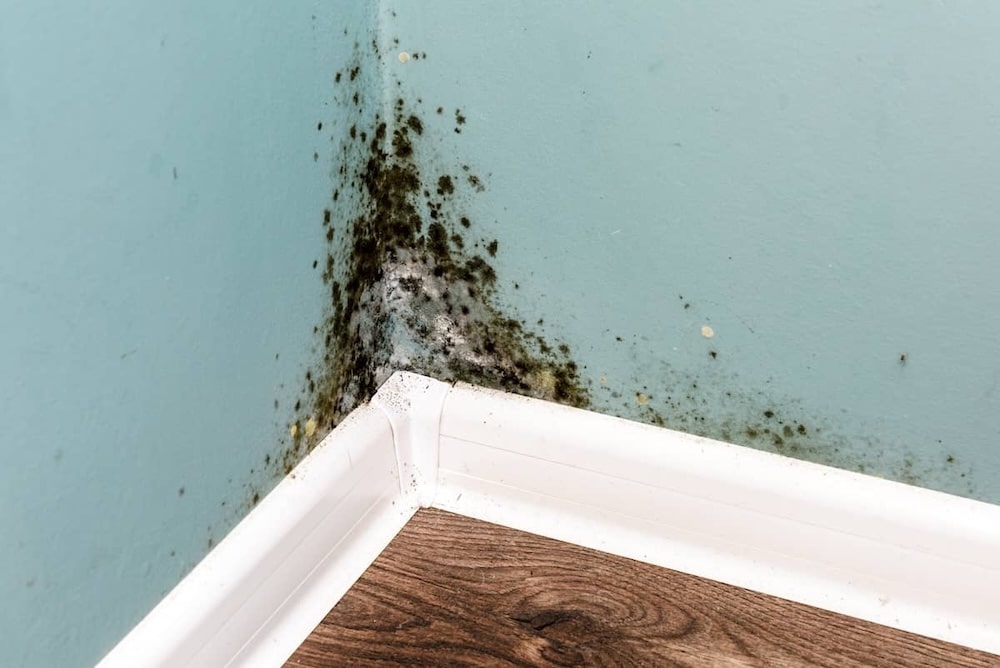
A lower starting number only solves half the problem in a basement that’s had mold. The moisture source still has to be found. A dehumidifier can’t keep up with water that keeps coming in through a leak, a grading problem, or a foundation crack. If you’ve seen mold before, professional mold testing can confirm whether it’s truly gone.
How to Adjust Your Setting by Season in North Carolina
Piedmont summers are long and sticky, and basements feel it more than any other part of the house. Here’s how to adjust through the year.
Summer (May Through September)
Hold the setting at 45% to 50%. Summer is when your dehumidifier works hardest. Warm outdoor air carries a lot of moisture, and when it reaches a cool basement, the humidity reading jumps. Keep basement windows and outside doors closed while the unit runs, or it will try to dry out the whole neighborhood.
Spring and Fall
Leave it at 45% to 50%. Rainy stretches in spring and early fall push groundwater against foundation walls. Don’t shut the unit off just because the weather cools down.
Winter (December Through February)
Keep the setting at 45% to 50%, or turn the unit off if your basement stays below 40% on its own. Cold winter air holds less moisture, so many Triad basements dry out naturally and the dehumidifier barely runs.
Watch the temperature too. ENERGY STAR advises that spaces regularly below 65°F may need a model rated for lower temperatures. Standard units can frost over their coils in a cold basement and stop pulling water.
How to Set Your Basement Dehumidifier, Step by Step
- Measure first. Place a digital hygrometer in the middle of the basement, away from the dehumidifier, for two or three days. This gives you a starting number. Hygrometers are inexpensive and sold at most hardware stores.
- Place the unit well. Set it near the center of the space with open air on all sides, a few feet from walls and boxes. Don’t tuck it into a corner or closet.
- Choose your target. Use the chart above. If you’re not sure, start at 45%.
- Set up drainage. If you can, run the drain hose to a floor drain, sump pit, or condensate pump. That way the unit never stops because the bucket is full.
- Close the space. Shut basement windows and outside doors so the unit is only drying the basement.
- Check after a week. Compare your hygrometer reading to the target. If the basement still reads above 50%, lower the setting by 5%. If it reads under 40% and the unit runs constantly, raise it by 5%.
- Clean the filter. Most units have a washable filter. A clogged one cuts airflow and makes the machine work harder. Check your manual for how often to clean it.
Why Your Dehumidifier Isn’t Reaching Its Setting
If your unit runs all day and the basement still reads 55% or higher, the setting usually isn’t the problem. Here are the most common causes we find.
- The built-in sensor is off. Onboard humidistats sit right next to the unit and can read high or low. Trust a separate hygrometer placed across the room.
- The unit is too small. Dehumidifiers are rated by how many pints of water they remove per day. A small unit in a large or wet basement may never catch up.
- The basement is too cold. Below about 65°F, standard units can ice up. Look for frost on the coils or a unit that runs but collects very little water.
- Water is still getting in. Foundation cracks, poor yard grading, clogged gutters, and plumbing leaks all add moisture faster than a dehumidifier can pull it out.
- Outside air is getting in. An open stairwell door, a vented crawl space next to the basement, or a dryer venting indoors all add moisture. If your home has a crawl space, read our guide on whether to encapsulate your North Carolina crawl space.
- The filter or coils are dirty. Dust buildup blocks airflow and cuts how much water the unit can remove.
If none of these explain it, the moisture is likely coming from the structure, not the air. A home inspection can help find the source.
Related Questions to Explore
Should I run a dehumidifier in my basement all the time?
Leave it plugged in and set to 45% to 50%, and let the humidistat decide when to run. In a North Carolina summer, that may mean it runs most of the day. In winter it may barely turn on. You don’t need to switch it on and off by hand.
What’s the difference between setting a dehumidifier at 45% vs 50%?
Both are safe. A 45% setting gives more cushion against condensation and mildew in finished or damp basements. A 50% setting uses less power and works well in dry, unfinished basements. If you see sweating pipes or smell mustiness at 50%, drop to 45%.
How do I know if my basement dehumidifier is set correctly?
Check a separate hygrometer after a week. You’ve got it right if the reading sits between 45% and 50%, there’s no musty smell or condensation, and the unit cycles off some of the time.
Will a dehumidifier get rid of musty smell in my basement?
It helps by drying the air, but it won’t remove mold that’s already growing. Learn more about whether a dehumidifier can help with black mold. If the smell hangs on after a few weeks at 45%, check for hidden growth, and learn the key differences between mildew and mold.
What size dehumidifier do I need for my basement?
Match the pints-per-day rating to your basement’s size and how damp it is. Bigger or wetter basements need a higher rating. Check the maker’s coverage chart and look for an ENERGY STAR model, which uses about 13% less energy than a standard unit.
Should basement dehumidifier settings change in winter?
The setting can usually stay at 45% to 50%. What changes is how often the unit runs. If your basement drops below 40% on its own or falls under 65°F, you can turn it off or switch to a low-temperature model.
When to Call a Professional
A dehumidifier manages humidity. It doesn’t fix the reason the humidity is there. Call an inspector if:
- Your basement stays above 55% with a properly sized unit set correctly
- You smell mustiness or see spots on walls, framing, or stored items
- Water stains, cracks, or white chalky residue (efflorescence) show up on foundation walls
- The bucket fills every day, even in dry weather
- You’re buying a home where a basement dehumidifier is running nonstop, which can hide a moisture problem
Maurice Quick, a licensed North Carolina home inspector and U.S. Navy veteran, inspects basements and crawl spaces across Greensboro, High Point, Winston-Salem, and Central North Carolina. Inspection tools like moisture meters can find damp spots behind drywall and under flooring that a hygrometer can’t.
Conclusion
- Set most basement dehumidifiers to 45% to 50%.
- Start at 40% to 45% for damp, finished, or previously moldy basements, then ease back up.
- Check the result with a separate hygrometer, and look for the moisture source if the unit can’t keep up.
If your basement won’t stay dry no matter what the dial says, contact Q&A Home Inspections to schedule an inspection and find out where the moisture is coming from.