
Common Causes of a Water Heater Leak in NC Homes
A water heater leak in a North Carolina home is most often caused by aging components, corrosion inside the tank, loose plumbing connections, pressure issues, or improper installation. Even a slow drip can signal a much larger problem and lead to water damage if it is not addressed early.
Because water heaters operate daily and hold a large volume of water under pressure, small failures tend to escalate quickly. Understanding the most common causes helps homeowners know what to watch for and when to take action.
How Water Heater Leaks Happen in NC Homes
Water heater leaks are especially common in North Carolina due to a combination of climate, housing age, and water conditions.
Many homes across the state were built more than 15 years ago, and water heaters are often original to the home or well past their expected lifespan.
Most standard tank-style water heaters are designed to last about 8 to 12 years. Once they exceed that range, leak risk increases sharply.
North Carolina’s humidity also plays a role. Moist environments accelerate corrosion on metal components, fittings, and tanks. In addition, many areas of the state have mineral-heavy water, which leads to sediment buildup inside the tank.
During home inspections, water heater leaks are frequently found alongside other plumbing concerns. In many cases, homeowners are unaware that there is an issue because the leak is slow or hidden.
1. Loose or Failing Water Supply Connections
One of the most common and least severe causes of a water heater leak is a loose or failing water supply connection.
Where these leaks usually occur:
- Cold water inlet at the top of the unit
- Hot water outlet pipe
- Threaded fittings or flex lines
Over time, washers dry out, fittings loosen, and metal connections corrode. These leaks may only appear when the water heater is actively heating or when hot water demand is high.
Why are these leaks often missed?
Small connection leaks can evaporate before pooling becomes visible. Homeowners may only notice:
- Light moisture around fittings
- Rust forming near the top of the tank
- Occasional dripping sounds
While these leaks are usually repairable, ignoring them allows corrosion to spread and can lead to larger failures.
2. Corrosion Inside the Water Heater Tank
Internal corrosion is one of the most serious causes of a water heater leak and one of the most common reasons full replacement is required.
How Corrosion Develops
Minerals in water settle at the bottom of the tank as sediment. Over time, this sediment damages the protective lining inside the tank. Once the steel beneath is exposed, rust forms and spreads.
As corrosion worsens, the tank wall becomes thinner until it eventually fails and leaks.
Warning signs homeowners may notice:
- Brown or rusty hot water
- Moisture or rust flakes near the base
- Popping or cracking sounds during heating
Once a tank itself is leaking, repairs are rarely effective. Replacement is usually the safest and most cost-effective option.
3. Failed Temperature and Pressure Relief Valve
The temperature and pressure relief valve is a critical safety component designed to release water if conditions inside the tank become unsafe.
Why the TPR valve may leak:
- Normal wear over time
- Excessive water pressure in the home
- Sediment is preventing proper sealing
A leaking TPR valve is often mistaken for a tank failure. In some cases, replacing the valve resolves the issue. In others, it reveals a deeper pressure problem.
If a TPR valve is actively discharging water, it means pressure or temperature levels are not being properly controlled. This is a safety concern and should be addressed promptly.
4. Cracked or Rusted Drain Valve
Drain valves allow water heaters to be emptied for maintenance or replacement. Because they sit near the bottom of the tank, they are vulnerable to corrosion and wear.
Common drain valve problems:
- Plastic valves crack with age
- Metal valves rusting internally
- Valves failing to reseal after use
Drain valve leaks often appear as slow seepage rather than active dripping. Over time, this moisture can damage flooring or create mold-friendly conditions.
5. Excessive Water Pressure in the Home
High water pressure is an underlying issue that contributes to many water heater leaks.
How pressure causes damage:
Excess pressure puts constant stress on:
- Internal tank walls
- Pipe connections
- Valves and seals
Homes without pressure regulators or thermal expansion tanks are at higher risk. Pressure issues often affect multiple plumbing fixtures, not just the water heater.
Signs that pressure may be too high:
- Frequent plumbing leaks
- Banging or vibrating pipes
- Repeated TPR valve discharge
Inspectors often recommend further evaluation when pressure-related symptoms are present.
6. Improper Installation or Past Repairs
Not all water heater leaks are caused by age or wear. Installation errors are another frequent contributor.
Issues inspectors commonly find:
- Missing expansion tanks
- Incorrect pipe materials
- Poorly sealed fittings
- Improper venting or support
DIY repairs or unlicensed installations increase the risk of leaks and safety hazards. These problems often surface during a home inspection, even if the water heater appears to function normally.
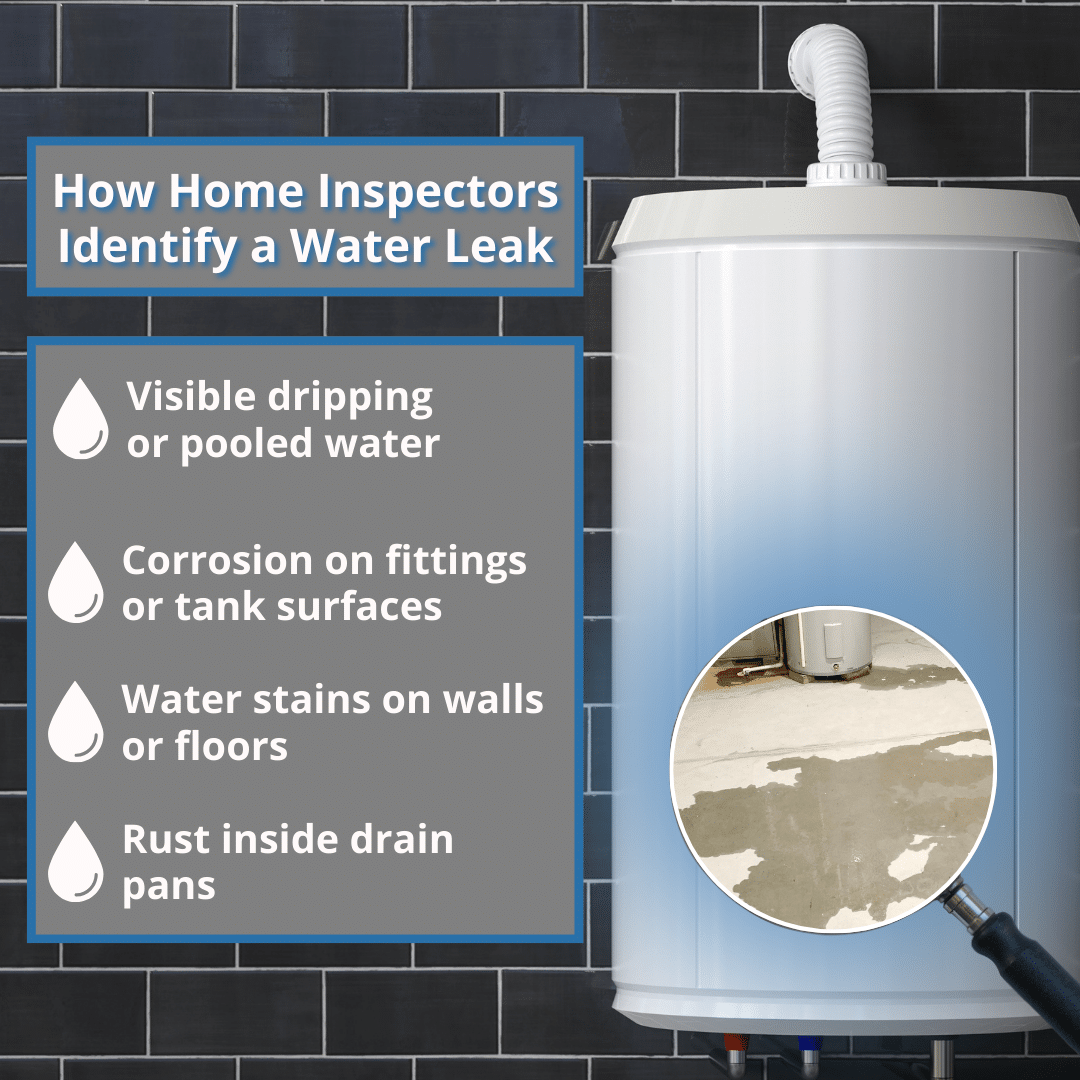
How Home Inspectors Identify a Water Heater Leak
Home inspectors evaluate both active leaks and evidence of past moisture.
What inspectors look for:
- Visible dripping or pooled water
- Corrosion on fittings or tank surfaces
- Water stains on walls or floors
- Rust inside the drain pans
Inspectors also assess age, installation quality, and overall condition. Even when no active leak is present, warning signs are documented to help homeowners plan.
What Homeowners Should Do If a Water Heater Leak Is Found
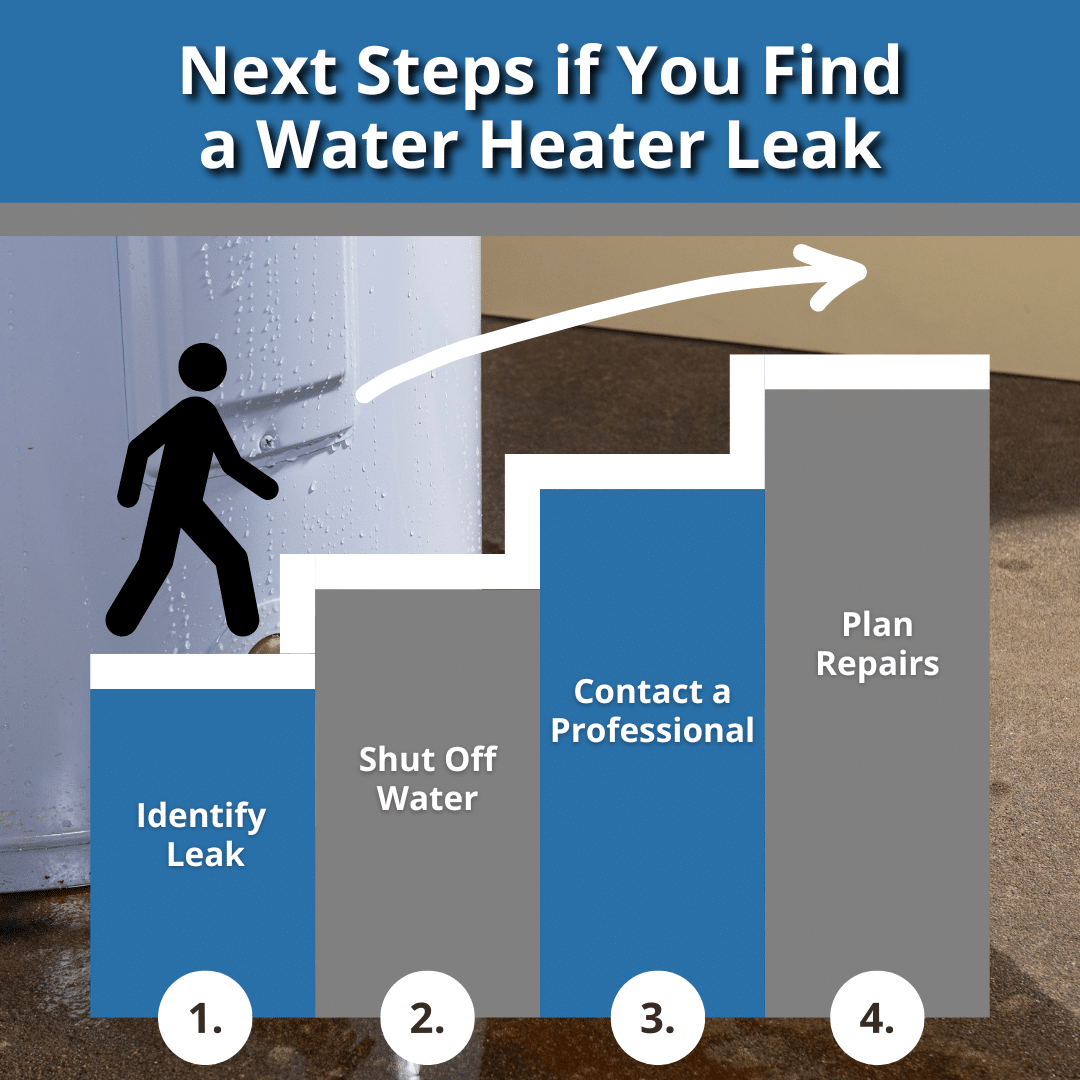
A water heater leak does not always require immediate replacement, but it should never be ignored.
Recommended next steps
- Identify where the leak is coming from
- Shut off the water if active leaking is present
- Contact a licensed plumber for evaluation
- Plan repairs or replacement based on age and condition
Acting early reduces the risk of water damage and unexpected system failure.
Common Water Heater Leak Causes and Typical Solutions
|
Leak Cause |
Typical Fix |
Replacement Needed |
|
Loose supply connection |
Tighten or replace the fitting |
Rare |
|
Failed TPR valve |
Replace valve |
Sometimes |
|
Rusted drain valve |
Replace valve |
Rare |
|
High water pressure |
Install a regulator or an expansion tank |
No |
|
Internal tank corrosion |
Full water heater replacement |
Yes |
How Water Heater Leaks Affect Home Inspections and Home Sales
Water heater leaks often play a role in real estate negotiations.
For buyers
- Requests for repair or replacement
- Concerns about hidden water damage
- Delays while issues are resolved
For sellers
- Required repairs before closing
- Credits or price adjustments
- Follow-up inspections
Identifying leaks early allows time for informed decisions and smoother transactions.
Related Questions
Is a water heater leak an inspection deal breaker in NC?
Not always. Minor leaks may be repaired, while tank leaks usually require replacement due to the home’s value.
Can a small water heater leak cause serious damage?
Yes. Slow leaks can damage flooring or framing and promote mold growth.
How long does a leaking water heater last?
Once leaking begins, failure often follows within weeks or months, especially with corrosion and high humidity.
Does homeowners’ insurance cover water heater leaks?
Coverage varies. Sudden failures and home inspections may be covered, while long-term leaks often are not.
Conclusion
Water heater leaks are often one sign of broader plumbing or maintenance concerns. A professional home inspection helps identify these issues early and provides clear documentation.
If you are buying, selling, or maintaining a home in North Carolina, scheduling an inspection can help you avoid costly surprises and better understand your home’s condition.
Q&A Home Inspections provides thorough evaluations that help homeowners make informed decisions when issues like a water heater leak are discovered.