
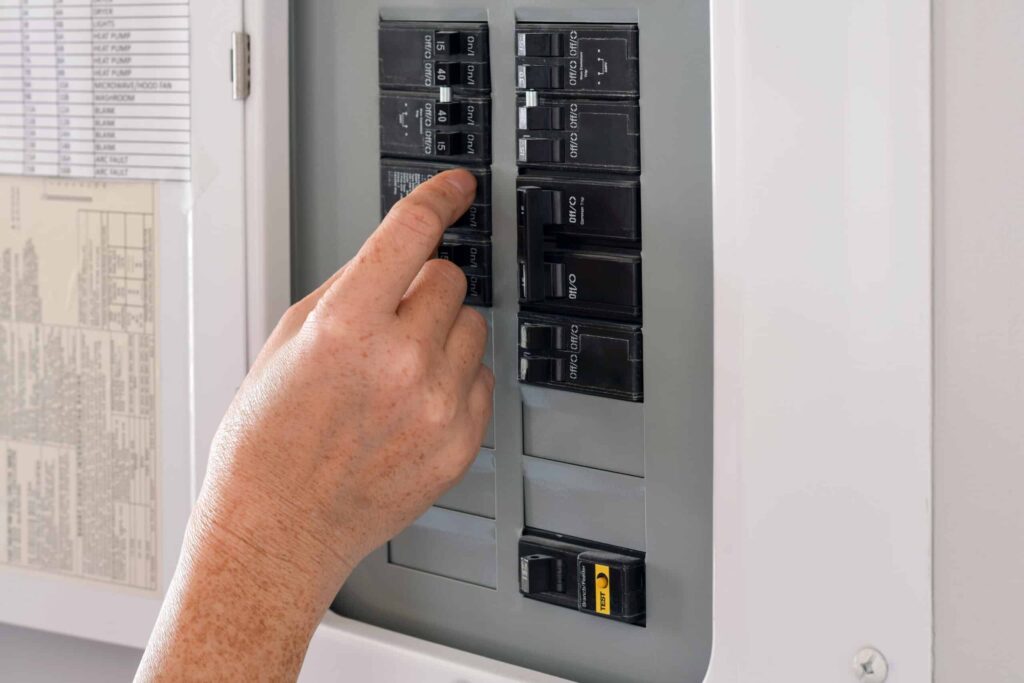
What a Tripped Circuit Breaker Means for Your Home
A tripped circuit breaker means a circuit in your home pulled more current than it can safely carry, so the breaker shut off power to protect the wiring. One trip is usually a simple overload you can fix in a minute. A breaker that trips again and again is a warning that the circuit, an appliance, or the panel itself needs a closer look.
At Q&A Home Inspections, we check electrical panels in homes across Greensboro, High Point, and the rest of the Triad every week. This guide covers what a tripped breaker means, how to reset it safely, what to do when it won’t stay on, and when to call for help.
What Does a Tripped Circuit Breaker Mean?
A tripped breaker means your circuit’s built-in safety switch did its job. Every breaker in your panel is rated for a set amount of current, usually 15 or 20 amps for standard household circuits. When the current goes past that limit, or when electricity escapes its normal path, the breaker cuts power in a fraction of a second.
That quick shutoff protects you from:
- Overheated wires inside your walls
- Electrical fires
- Shocks from faulty outlets or appliances
- Damage to electronics and appliances
The U.S. Fire Administration lists electrical malfunction as a leading cause of home fires year after year. Your breakers are the first line of defense against that risk, so a trip is useful information, not just a hassle.
How Do You Know If a Breaker Has Tripped?
You can tell a breaker has tripped when part of your home loses power and one breaker handle sits out of line with the rest. Common signs include:
- Lights or outlets in one area stop working while the rest of the house has power
- An appliance shuts off in the middle of use
- A breaker handle rests in the middle position between ON and OFF
- A handle feels loose or has a little wiggle to it
- A red or orange indicator shows in a small window on newer breakers
If a room is dark but no breaker looks tripped, check for a GFCI outlet nearby. Bathrooms, kitchens, garages, and outdoor outlets often have a reset button right on the outlet.
What Causes a Circuit Breaker to Trip?
Most breaker trips come from one of six causes. The table below shows what each one looks like.
| Cause | What’s happening | Common clue |
|---|---|---|
| Circuit overload | Too many devices drawing power on one circuit | Trips when several things run at once |
| Short circuit | A hot wire touches a neutral wire | Trips instantly, sometimes with a pop, spark, or burning smell |
| Ground fault | Current escapes to a ground path, metal box, or water | Trips in bathrooms, kitchens, garages, or outdoors |
| Arc fault | Damaged or loose wiring sparks inside a wall or cord | An AFCI breaker trips, often on bedroom or living room circuits |
| Faulty appliance | A motor, heating element, or cord has failed | Trips only when one appliance runs |
| Worn breaker or panel | The breaker itself is old, weak, or damaged | Trips under light loads, feels hot, or buzzes |
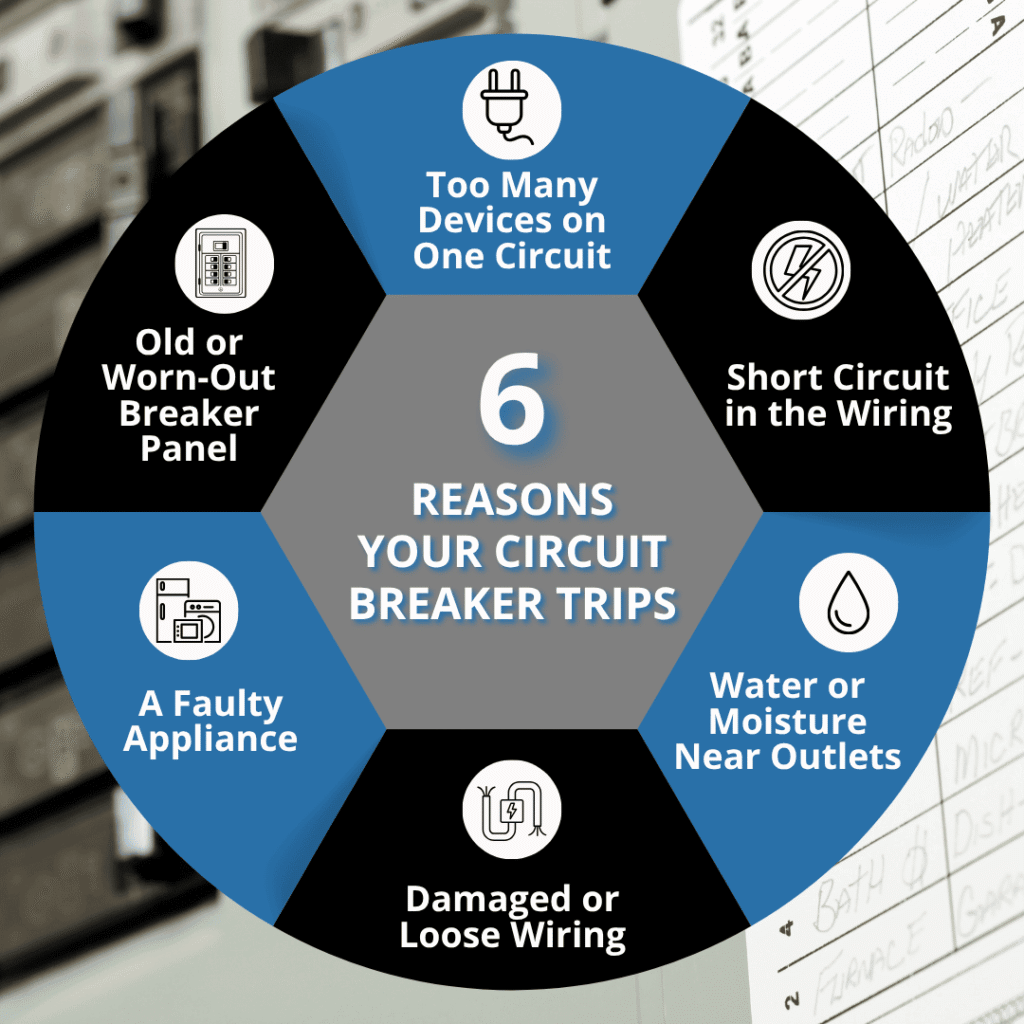
Circuit Overload
An overload is the most common reason a breaker trips. A standard 15-amp circuit can safely carry about 1,440 watts of steady load. A space heater on high can pull 1,500 watts by itself, so adding a TV or lamp to that circuit is often enough to shut it off.
Kitchens and bathrooms see overloads often. Running a microwave, toaster, and coffee maker together, or a hair dryer and curling iron at once, can push one circuit past its limit.
Short Circuit
A short circuit happens when a hot wire touches a neutral wire and current rushes through with almost no resistance. The breaker trips right away. Loose connections, damaged outlets, and wiring chewed by rodents living in walls or crawl spaces are common sources in North Carolina homes. Black marks around an outlet or a burning smell are signs to stop and call an electrician.
Ground Fault
A ground fault happens when current leaves its normal path and flows to the ground through a metal box, water, or a person. These faults are most common in bathrooms, kitchens, laundry rooms, garages, and outdoor outlets. The Triad’s humid summers and damp crawl spaces raise the risk, which is one reason we pay close attention to basement and crawl space humidity levels during inspections.
Arc Fault
An arc fault is a spark jumping between damaged or loose wires. Arc-fault circuit interrupter (AFCI) breakers are built to catch these sparks before they start a fire. Newer homes have AFCI breakers on most living-area circuits, and they tend to trip more easily than standard breakers.
Faulty Appliance
If the breaker trips every time one appliance turns on, the appliance is the likely cause. Refrigerator compressors, window AC units, HVAC blower motors, vacuum cleaners, and water heater elements are frequent offenders. Unplug the appliance and see whether the circuit stays on.
Worn Breaker or Outdated Panel
Breakers wear out. One that has handled years of heavy loads, or a single hard short, can start tripping under normal use. Some older panels are a bigger concern. Federal Pacific Stab-Lok and Zinsco panels, still found in some older NC homes, have a history of breakers that may not trip when they should. Older homes can also have mixed or outdated wiring, so it helps to know the common types of electrical wire you might find behind the walls.
How to Reset a Tripped Circuit Breaker Safely
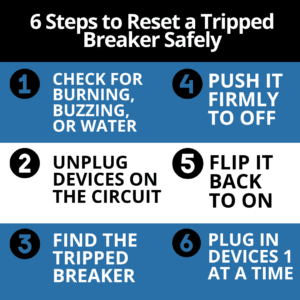
To reset a tripped breaker, turn off the devices on that circuit, push the breaker handle fully to OFF, then flip it back to ON. Follow these steps in order:
- Check for danger first. If you smell burning, see scorch marks, hear buzzing, or notice water near the panel, do not touch it.
- Unplug or switch off devices on the affected circuit. This keeps a rush of demand from hitting the circuit the moment power returns.
- Find the tripped breaker. Look for a handle in the middle position or out of line with the others.
- Push it firmly to OFF. Most breakers won’t reset until the handle goes all the way to OFF first. You may feel a click.
- Flip it back to ON. Keep your hands dry, stand to the side of the panel, and use one firm motion.
- Turn devices back on one at a time. If the breaker trips when a certain device starts, you’ve found the problem.
Don’t use the TEST button on an AFCI or GFCI breaker to reset it. That button trips the breaker on purpose.
What If the Breaker Won’t Reset or Keeps Tripping?
If a breaker trips again right after you reset it, stop resetting it. Forcing a faulty circuit back on over and over can overheat the wiring. The pattern of the trips usually points to the cause:
- Trips instantly with nothing plugged in: likely a short circuit or ground fault in the wiring, an outlet, or a hardwired fixture like a bathroom fan or garbage disposal. This needs a licensed electrician.
- Trips after a few minutes of use: likely an overload. Move high-draw devices to other circuits.
- Trips only with one appliance: likely the appliance. Stop using it until it’s repaired or replaced.
- Won’t click into the ON position at all: the breaker may be damaged, or a fault is keeping it from latching.
- Trips during storms or heavy rain: moisture may be reaching outdoor outlets, crawl space wiring, or the panel.
The Massachusetts Department of Fire Services lists frequently tripped breakers as a sign to call a licensed electrician soon. It also advises calling the fire department right away if you notice sparks, a sizzling or buzzing sound, or a burning smell.
How Can You Tell If a Circuit Breaker Is Bad?
A bad breaker trips under light loads, won’t reset, or shows physical signs of heat damage. Watch for:
- A breaker that feels hot to the touch
- Burn marks, melted plastic, or a scorched smell at the panel
- Buzzing or crackling from the panel
- A handle that feels loose or won’t stay in position
- Trips with little or nothing running on the circuit
Only a licensed electrician should test or replace a breaker. Taking the panel cover off exposes live parts, and the wires feeding the main breaker stay energized even when the main is switched off.
Is a Tripped Circuit Breaker Dangerous?
A single tripped breaker is not dangerous on its own. It means the safety system worked. The danger comes from ignoring a pattern. A breaker that keeps tripping points to a problem that can overheat wires, damage appliances, or start a fire behind a wall.
The bigger risk is a breaker that should trip and doesn’t. That is why panel age, brand, and breaker sizing matter so much during a home inspection.
How North Carolina Weather Affects Your Breakers
North Carolina’s climate plays a real role in how often breakers trip.
- Hot, humid summers: AC units, dehumidifiers, and fans run for hours, pushing circuits close to their limits. Moisture in crawl spaces and garages can corrode outlets and connections over time.
- Summer thunderstorms: Lightning and utility surges can trip breakers and damage electronics. Whole-home surge protection adds a layer of defense.
- Winter cold snaps: Space heaters are one of the top causes of winter trips, especially on bedroom circuits shared with other devices.
- Heavy rain: Wet crawl spaces lead to ground faults and corroded wiring, especially in older homes with low foundations. Good crawl space ventilation and waterproofing and the right crawl space cover help keep that moisture away from your wiring.
What Home Inspectors Look for in Your Electrical Panel
During a home inspection, we treat a tripping breaker, or signs of past trouble at the panel, as a clue to follow. A licensed home inspector doesn’t repair electrical systems, but we find the problems and tell you when an electrician needs to take a closer look. Our home inspection covers:
- Panel condition: age, brand, rust, moisture, and signs of overheating
- Breaker sizing: whether each breaker matches the wire it protects, since an oversized breaker may not trip when it should
- Double-tapped breakers: two wires connected to a breaker designed for one
- GFCI and AFCI protection: in kitchens, bathrooms, laundry rooms, garages, and outdoor outlets
- Outlets and switches: tested for open grounds, reversed polarity, and loose connections
- Thermal imaging: hot spots behind walls or at the panel that can point to overloaded circuits or loose connections
- Crawl space wiring: rodent damage, moisture, and loose splices, often checked during our crawl space inspections
For buyers, these findings can shape repair requests before closing. Learn why a pre-purchase home inspection matters for NC buyers. For current homeowners, a yearly home inspection can catch a failing breaker before it becomes a fire hazard.
How to Prevent Future Breaker Trips
A few habits cut down on trips and keep your electrical system safer:
- Spread out high-wattage appliances across different circuits instead of running them all at once.
- Plug space heaters directly into a wall outlet, never into an extension cord or power strip, and keep other devices off that circuit.
- Plug major appliances straight into the wall. Refrigerators, washers, and dryers should never run on extension cords.
- Add whole-home surge protection to guard against storm surges.
- Keep crawl spaces and basements dry to reduce ground faults and corrosion.
- Add dedicated circuits for EV chargers, window AC units, and workshop tools. A licensed electrician can tell you what your panel can support.
- Label your panel so you can find the right breaker fast.
Related Questions to Explore
How many times can a circuit breaker trip before it goes bad?
There is no set number. Breakers can handle many small overload trips over their lifetime, but a single severe short circuit can damage one. If the same breaker has tripped several times in a short span, have a licensed electrician check it.
Is it dangerous if a circuit breaker keeps tripping?
Yes. A breaker that keeps tripping means something is wrong with the load, the wiring, an appliance, or the breaker itself. Ignoring it raises the risk of overheated wires and electrical fires.
Why does my breaker keep tripping with nothing plugged in?
A breaker that trips with nothing plugged in usually points to a short circuit or ground fault in the wiring, an outlet, or a hardwired fixture. A failing breaker can also cause it. This is a job for a licensed electrician.
How do I know if a circuit breaker is faulty?
A faulty breaker may feel hot, look scorched, buzz, refuse to reset, or trip when almost nothing is running on the circuit. Any of these signs means the breaker should be tested and likely replaced.
Is it OK to reset a tripped breaker?
Yes, it is generally fine to reset a tripped breaker once after unplugging devices on that circuit. If it trips again right away, stop and find the cause before trying again.
Do breakers wear out?
Yes. Heat, age, and repeated trips all wear down a breaker’s internal parts. A home inspection includes a close look at your panel and breakers for signs of wear.
When to Call a Professional
Call a licensed electrician right away if:
- The breaker won’t reset or trips as soon as you reset it
- You smell burning or see scorch marks on outlets or the panel
- The panel buzzes, crackles, or feels warm
- Lights flicker or dim often
- Your home has a Federal Pacific or Zinsco panel
Call Q&A Home Inspections if you’re buying or selling a home, want a full picture of your electrical system’s condition, or want to know what’s behind recurring problems before you hire contractors. We serve Greensboro, High Point, Winston-Salem, Raleigh/Durham, Charlotte, and communities across central North Carolina.
Conclusion
A tripped circuit breaker is a safety device doing exactly what it was built to do. The key takeaways:
- One trip is usually an overload. Unplug a few things and reset the breaker once.
- Repeated trips, burning smells, or a breaker that won’t reset call for a licensed electrician.
- Older panels, especially Federal Pacific and Zinsco, deserve a professional look.
If you’re buying, selling, or living in a home in the Triad, schedule a home inspection with Q&A Home Inspections and get a clear picture of your electrical system’s health.