
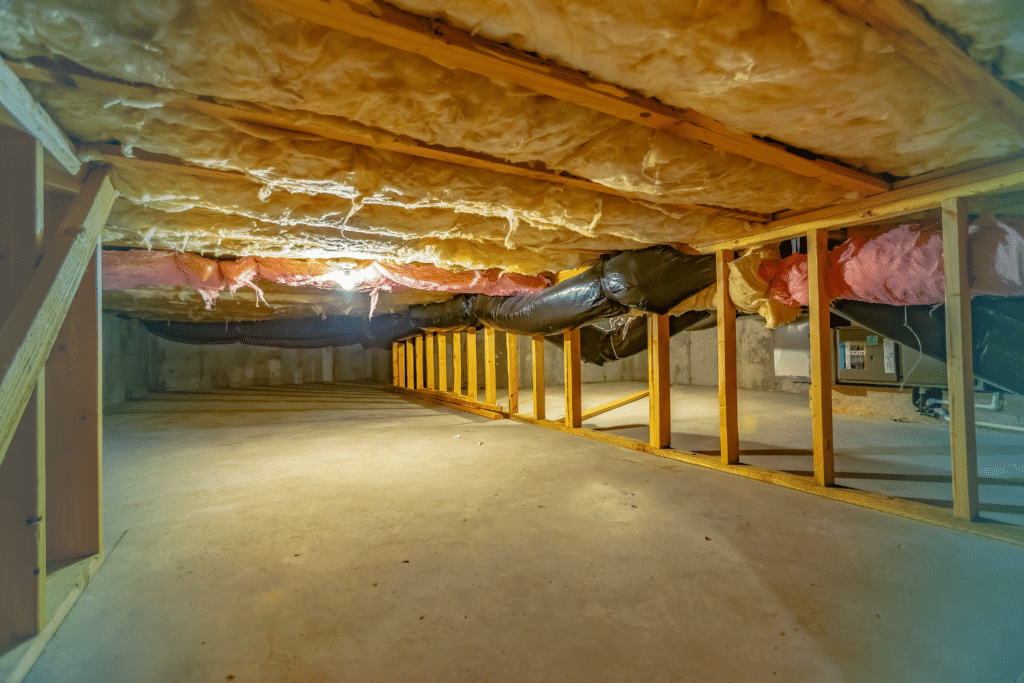
Signs of Moisture in a Crawl Space Found During Inspections
Moisture in crawl space areas is one of the most common problems home inspectors find, especially in North Carolina.
During inspections, it often shows up as damp soil, standing water, mold growth, musty odors, or damaged materials beneath the home. If moisture is not addressed early, it can affect air quality, structural components, energy efficiency, and resale value.
This guide explains why moisture in crawl space areas is so common, what inspectors look for, what it means for your home, and what steps homeowners should take next.
Why Moisture Is So Common in North Carolina Homes
North Carolina’s humid climate creates ideal conditions for moisture problems, particularly below the home.
The state experiences long periods of high humidity, frequent rainfall, and warm temperatures. Humid air naturally seeks cooler spaces, and crawl spaces often provide that environment.
When warm air enters a cooler crawl space, condensation can form on wood framing, ductwork, and plumbing lines.
Other contributing factors include:
- Heavy rain events that saturate the surrounding soil
- Clay-heavy soil that drains slowly
- High groundwater levels in many areas
- Seasonal temperature changes that promote condensation
Homes across the state, regardless of age, can experience moisture issues. Older homes may lack proper vapor barriers, while newer homes may have grading or drainage problems that allow water to collect near the foundation.
Why Crawl Spaces Are Especially Vulnerable to Moisture
Crawl spaces sit directly above the ground and below the living areas of the home. That position makes them highly susceptible to moisture.
Several conditions contribute to this vulnerability:
- Bare soil releases moisture into the air
- Limited airflow traps humidity
- Poor drainage allows water to pool
- Damaged or missing vapor barriers allow moisture to rise
Many crawl spaces were designed decades ago with venting strategies that do not perform well in humid climates. Instead of drying the area, outside air can introduce even more moisture.
Because crawl spaces are out of sight, problems often go unnoticed until a home inspection reveals them.
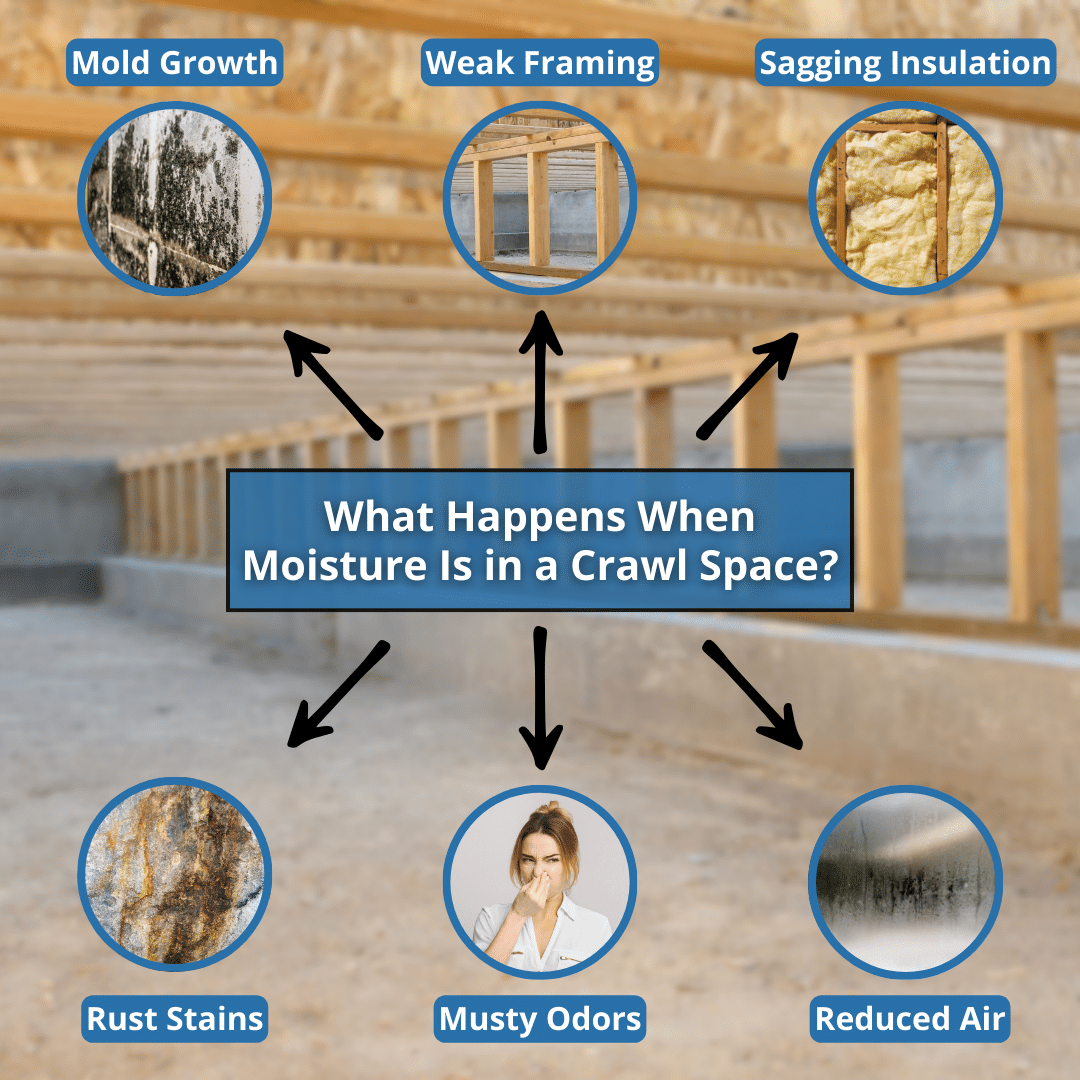
What Happens When Moisture Is in a Crawl Space?
Moisture in crawl space areas does not stay isolated. Over time, it can impact multiple parts of the home.
Common effects include:
- Mold and mildew growth
- Weakening of wood framing
- Sagging or ineffective insulation
- Rust on metal components
- Persistent musty odors
- Reduced indoor air quality
Many homeowners are surprised to learn that a significant portion of indoor air originates from below the home. When crawl space air is damp or moldy, that air can move upward into living spaces through gaps, vents, and ductwork.
This is why moisture findings during inspections are taken seriously, even if the living areas appear unaffected at first.
Why Moisture in Crawl Space Is a Common Inspection Finding
Home inspections often provide the first thorough look at a crawl space.
Moisture issues are commonly found because:
- Crawl spaces are rarely checked by homeowners
- Moisture develops gradually
- Early warning signs are easy to miss
- Weather conditions regularly reintroduce moisture
Professional inspectors are trained to look beyond obvious water. They evaluate materials, odors, airflow, and conditions that may indicate long-term moisture exposure.
At Q&A Home Inspection, crawl spaces are carefully evaluated and documented so homeowners understand both current concerns and future risks.
Common Signs of Moisture in Crawl Space Found During Inspections
Below are the most frequent signs inspectors document when moisture in crawl space conditions exists.
1. Standing Water or Damp Soil
Standing water is a clear indicator of a moisture problem. Even damp soil can signal ongoing water intrusion.
Inspectors often observe:
- Pooled water after rainfall
- Saturated or muddy soil
- Water staining on foundation walls
Common causes include poor grading, clogged gutters, plumbing leaks, or surface water flowing toward the home.
2. Visible Mold or Mildew Growth
Mold thrives in dark, damp environments, making crawl spaces an ideal location when moisture is present.
Inspectors commonly find growth on:
- Floor joists
- Support beams
- Sub-flooring
- Insulation backing
Not all mold appears black or fuzzy. Some growth looks like discoloration or spotting, but all visible mold is documented.
3. Musty Odors Coming From Below the Home
A musty smell is often one of the first signs homeowners notice.
These odors usually result from mold, mildew, or damp materials. Because air moves upward, smells from the crawl space can enter living areas, closets, and HVAC systems.
4. Wood Rot or Deterioration of Structural Components
Wood absorbs moisture over time. When exposure continues, structural components can weaken.
Inspectors look for:
- Soft or spongy wood
- Dark staining or discoloration
- Cracks or separation in beams
Early damage may not cause noticeable floor problems yet, but it often worsens if moisture remains.
5. Rust or Corrosion on Metal Components
Metal reacts quickly to moisture.
Inspectors may document:
- Rusted fasteners
- Corroded ductwork
- Deteriorated metal supports
Rust often points to long-term humidity rather than a single water event.
6. Sagging Insulation or Damaged Vapor Barriers
Moisture reduces insulation performance and adds weight that causes it to fall.
Inspectors may note:
- Insulation hanging or missing
- Wet or compressed insulation
- Torn or incomplete vapor barriers
Damaged vapor barriers allow moisture from the soil to continue rising into the crawl space.
How Home Inspectors Identify Moisture in Crawl Space
Inspectors use a combination of observation and tools to evaluate moisture conditions.
This typically includes:
- Visual inspection of soil and materials
- Moisture meters to check wood surfaces
- Odor detection
- Reviewing ventilation and drainage conditions
Findings are documented with photos and written notes in the inspection report.
Inspectors also identify conditions that could lead to future moisture problems, even if active water is not present on inspection day.
Common Crawl Space Moisture Signs and What They Mean
Below are some of the most common moisture-related conditions home inspectors find in crawl spaces and their potential impact.
|
Inspection Finding |
What It Indicates |
Why It Matters |
|
Standing water |
Active water intrusion |
Can lead to mold and structural damage |
|
Damp soil |
Ongoing moisture exposure |
Increases humidity and mold risk |
|
Mold growth |
Prolonged moisture |
Affects air quality and materials |
|
Musty odor |
Hidden moisture or mold |
Odors often spread into living spaces |
|
Wood rot |
Long-term exposure |
Weakens structural components |
|
Rusted metal |
High humidity |
Signals ongoing moisture conditions |
|
Sagging insulation |
Moisture damage |
Reduces energy efficiency |
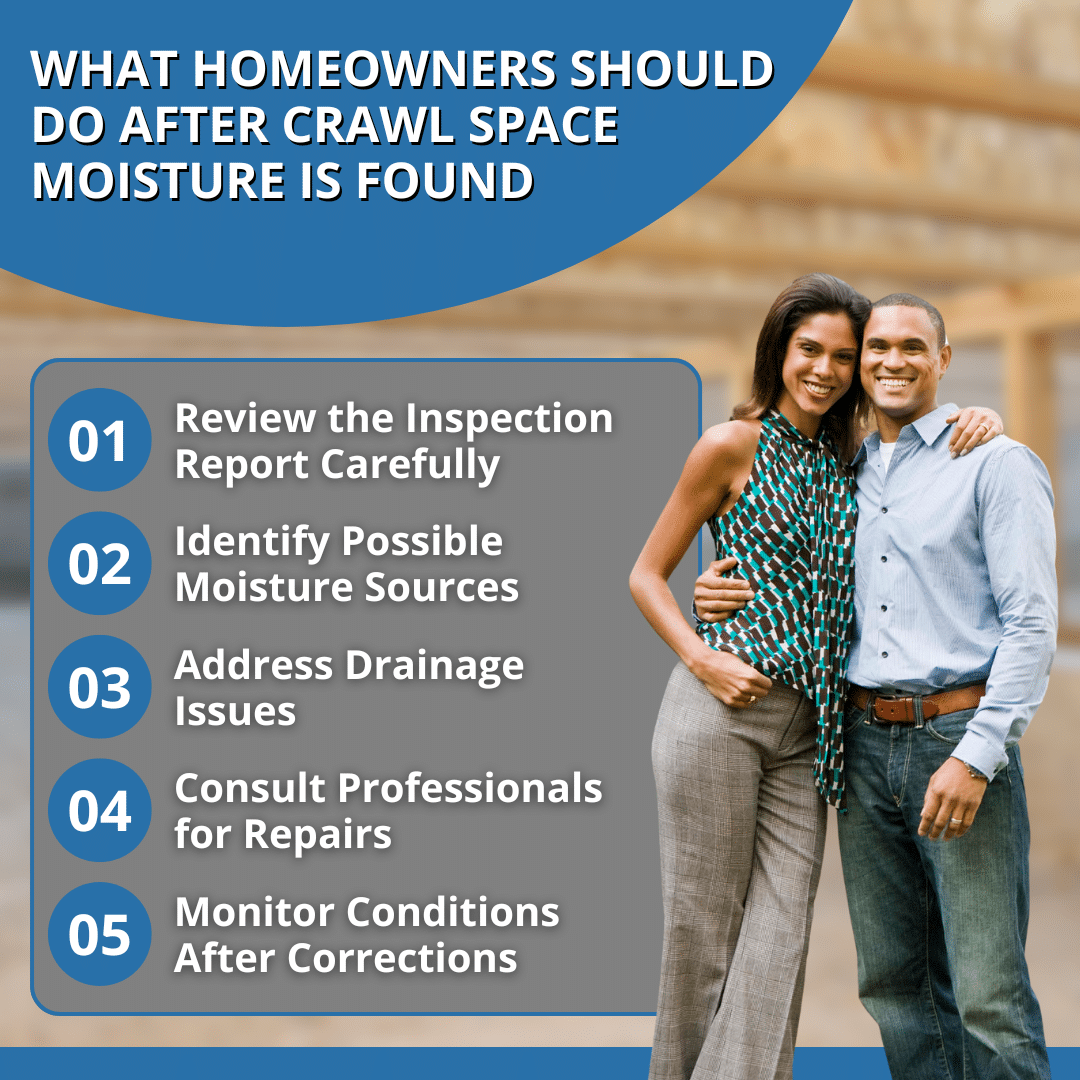
What Homeowners Should Do After Moisture Is Found
Finding moisture in crawl space areas can feel overwhelming, but clear steps help reduce risk.
Homeowners should:
1. Review the Inspection Report Carefully
Take time to read through the full report and understand where moisture was found, how severe it is, and what areas are affected. Pay attention to photos, notes, and recommendations so nothing important is overlooked.
2. Identify Possible Moisture Sources
Look for what may be causing the moisture, such as poor exterior drainage, plumbing leaks, high humidity, or groundwater intrusion. Knowing the source helps determine the most effective solution.
3. Address Drainage or Plumbing Issues First
Fixing gutters, downspouts, grading, or plumbing leaks should be the top priority. These issues often contribute the most moisture and can make other repairs ineffective if left unresolved.
4. Consult Qualified Professionals for Repairs
Some moisture problems require expertise beyond basic maintenance. Reach out to licensed plumbers, drainage specialists, or foundation professionals to ensure repairs are done correctly and safely.
5. Monitor Conditions After Corrections
Once repairs are completed, continue checking the area for signs of moisture returning. Regular monitoring helps confirm the issue is resolved and prevents future damage.
Some moisture issues are seasonal, while others require professional intervention. Addressing problems early helps prevent more costly repairs later.
Documentation is also important for buyers and sellers, as moisture findings often influence negotiations.
How Moisture in Crawl Space Affects Home Value and Sales
Moisture issues can raise concerns during real estate transactions.
Buyers often worry about:
- Hidden damage
- Mold risks
- Future maintenance costs
Sellers may be asked to make repairs or offer credits when moisture issues are documented in an inspection report.
Resolving moisture problems early helps protect home value and reduces surprises during the selling process.
Related Questions
Is moisture in a crawl space dangerous?
Moisture itself is not always dangerous, but it can lead to mold, wood damage, and poor air quality if ignored.
Can moisture in a crawl space cause mold upstairs?
Yes. Air movement allows moisture and mold spores to travel into living areas.
How much moisture in a crawl space is too much?
Any ongoing moisture should be addressed. Standing water, visible mold, or strong odors are clear warning signs.
Do all crawl spaces have moisture problems?
Not all, but many do. Proper drainage, vapor barriers, and maintenance reduce the risk of mold and moisture.
Should moisture in a crawl space fail a home inspection?
Home inspections do not pass or fail homes. Moisture is documented so homeowners and buyers can make informed decisions.
When to Schedule a Professional Crawl Space Inspection
A crawl space inspection is recommended when:
- Buying or selling a home
- Musty odors are present indoors
- Floors feel damp or uneven
- Water issues have occurred in the past
- Routine maintenance has been delayed
In North Carolina’s climate, proactive inspections help catch issues early.
Conclusion
Moisture in crawl space areas is common, but it should never be ignored. Early detection helps protect your home’s structure, air quality, and long-term value.
If you are buying, selling, or maintaining a home and want a clear understanding of crawl space conditions, scheduling a professional inspection is a smart next step.
Q&A Home Inspections provides thorough inspections with clear, easy-to-understand reports so homeowners can move forward with confidence.