
What a Tripped Circuit Breaker Means for Your Home and Safety
A tripped circuit breaker is one of the most common electrical issues homeowners face. One moment everything is working, and the next your lights go out, an outlet stops working, or a major appliance shuts off without warning.
In North Carolina, where homes range from historic properties in Raleigh to new builds near Charlotte, breaker trips happen for many different reasons. Understanding the cause helps you respond safely and prevent bigger issues later.
This guide explains why breakers trip, how to reset them safely, what causes repeat problems, how weather affects your electrical system, and why electrical issues matter so much during a home inspection.
What a Tripped Circuit Breaker Means
A tripped circuit breaker means the electrical circuit became overloaded, shorted, or unsafe. When this happens, the breaker automatically shuts off to prevent:
- Electrical fires
- Overheated wiring
- Appliance damage
- Shock hazards
It’s your home’s built-in safety device. When a breaker trips, it’s your electrical system saying:
“Something isn’t safe. I need you to look into this.”
Sometimes the cause is simple. Other times it’s a warning sign that shouldn’t be ignored.
Most Common Reasons a Breaker Trips in North Carolina Homes
Breakers trip for a few common reasons across NC homes. Understanding these helps you troubleshoot the issue quickly and safely.
1. Circuit Overload
An overload happens when a circuit has more electrical demand than it was designed to handle.
This is the most common cause of breaker trips.
Examples include:
- Running a space heater and TV on the same circuit
- Plugging multiple appliances into one outlet
- Using a microwave, toaster, and coffee maker at once
- Hair dryers + curling irons in bathroom circuits
This happens often in NC homes where older wiring meets modern power needs.
Signs of an overload:
- Flickering lights
- Warm outlet plates
- Warm breaker
- Tripping when multiple devices run together
2. Short Circuit
A short circuit is more serious and happens when a hot wire touches a neutral or ground wire.
This creates a sudden surge of electricity, causing an immediate breaker trip.
Possible causes:
- Loose wiring
- Damaged outlet
- Failing appliance
- Rodent-chewed wiring in crawlspaces. This is very common in North Carolina homes.
Short circuits may create:
- Burnt smell
- Black marks around outlets
- Sparks
These warning signs require immediate attention.
3. Ground Fault
Ground faults occur when a hot wire touches a grounded surface or moisture.
This is especially common in:
- Bathrooms
- Kitchens
- Garages
- Outdoor outlets
- Basements and crawlspaces
North Carolina’s humid summers, heavy rains, and coastal moisture increase the chances of ground faults.
4. Faulty Appliance
Sometimes the appliance itself causes the breaker to trip.
Examples:
- HVAC unit pulling too much power
- Failing refrigerator compressor
- Old vacuum cleaner
- Faulty microwave
- Water heater wiring issues
If the breaker trips every time a specific item runs, the appliance is likely the issue.
5. Old or Failing Breaker Panel
Many NC homes still have older electrical panels that cannot support today’s power needs.
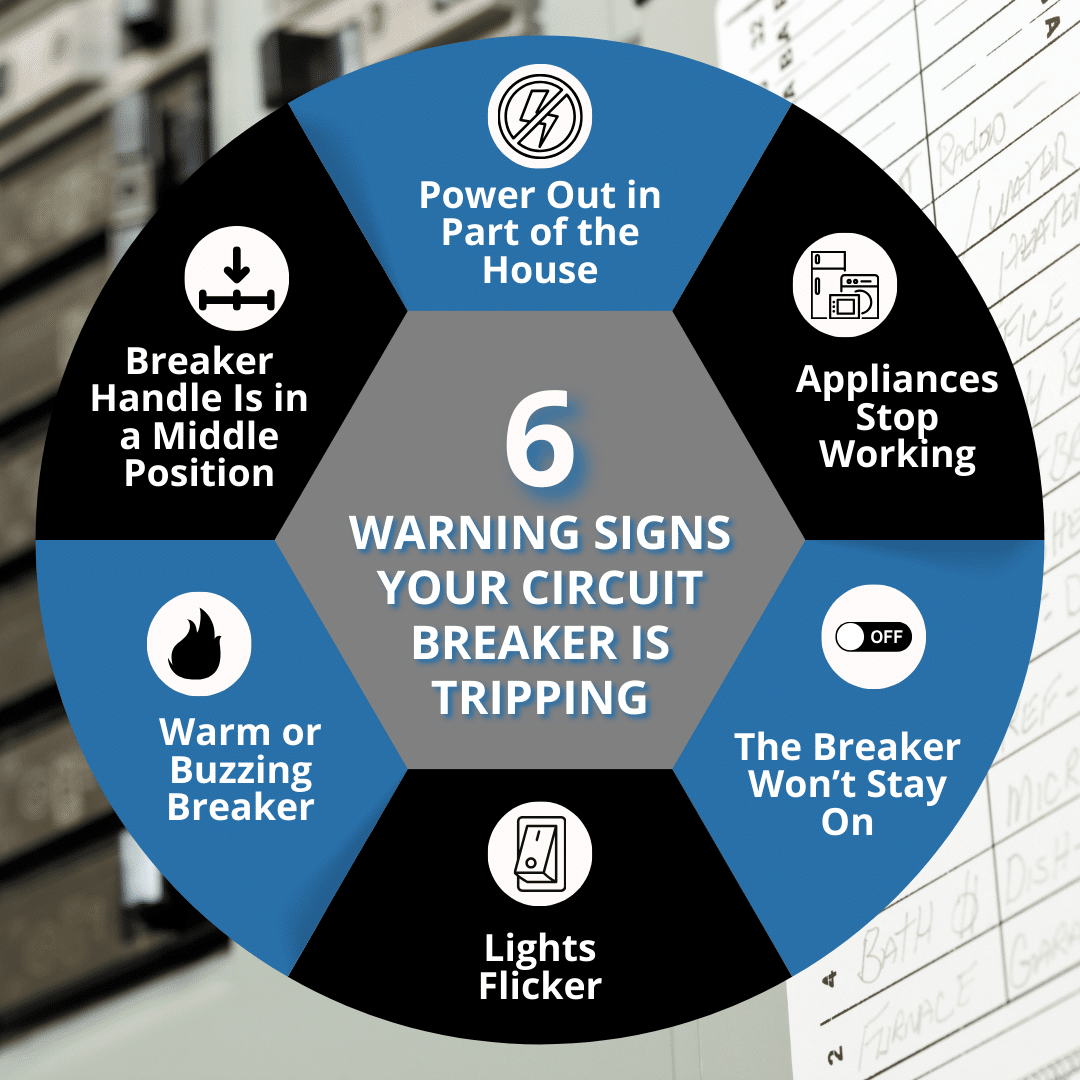
Signs include:
- Breakers that trip repeatedly
- Buzzing or humming sounds
- Breakers hot to the touch
- Panel corrosion
- Flickering lights
Homes with older Zinsco or Federal Pacific panels face additional safety risks.
How to Reset a Tripped Breaker Safely
Resetting a breaker is simple if you follow the right steps.
Step 1: Locate the Tripped Breaker
In the panel, look for:
- A switch in the middle position
- A slightly misaligned switch
- A breaker with a red/orange indicator
Step 2: Turn Off Devices on That Circuit
Before you reset, turn off appliances such as:
- TVs
- Computers
- Microwaves
- Space heaters
- Hair tools
This prevents a surge when the circuit turns back on.
Step 3: Reset the Breaker
Firmly switch it OFF, then back to ON.
If it immediately trips again:
- The appliance wiring may be faulty,
- The circuit may be overloaded, or
- You may have wiring problems behind the walls.
Stop resetting and investigate further.
Step 4: Turn Devices Back On One at a Time
Turning devices back on helps identify which device caused the problem.
How Weather and Climate Affect Breakers in NC Homes
North Carolina’s climate impacts electrical systems in several ways.
Hot and Humid Summers
High humidity increases electrical resistance and stresses outlets and wiring.
Air conditioners, dehumidifiers, fans, and refrigerators work harder, increasing circuit loads, a common cause of breaker trips.
Crawlspaces, basements, and garages become humid, which can corrode outlets or wiring.
Thunderstorms and Lightning
NC has frequent summer thunderstorms. Lightning can create surges that:
- Damage breakers
- Overload circuits
- Fry electronics
- Cause panel damage
Homes without whole-home surge protection are at risk.
Winter Cold Snaps
Space heaters are one of the top causes of tripped breakers in winter.
Even one space heater can overload a 15-amp circuit if anything else is plugged in.
Heavy Rain and Flooding
Wet crawlspaces can cause:
- Ground faults
- Corroded wiring
- Damp GFCI outlets
- Moisture-related shorts
This is common in older NC homes with low-lying foundations.
How Home Inspectors Identify the Cause of a Tripped Breaker
When a breaker trips during an inspection, it’s not ignored; it’s investigated. Inspectors use multiple tools and methods to understand the cause.
1. A Complete Visual Inspection
Inspectors look for:
- Damaged outlets
- Black marks or scorching
- Loose wiring
- Overloaded circuits
- Missing GFCI protection
- Improper DIY wiring
Older homes may have mismatched wiring from multiple past renovations.
2. Outlet and Switch Testing
Professional testers check for:
- Open grounds
- Reverse polarity
- Faulty GFCI outlets
- Excessive voltage drop
- Dangerous wiring patterns
These issues are often clues behind frequent breaker trips.
3. Thermal Imaging
Thermal cameras help inspectors spot hidden electrical problems.
They can detect:
- Overheating wires
- Loose connections
- Overloaded circuits
- Moisture behind walls
- Wiring damaged by pests
If an area appears hotter or cooler than the surrounding walls, it may indicate:
- A short circuit
- Hidden moisture
- Insulation issues
- Failing wiring
4. Electrical Panel Evaluation
Inspectors check:
- Panel age and condition
- Double-tapped breakers
- Worn or outdated components
- Labeled vs. unlabeled circuits
- Signs of corrosion or moisture
- Panel brands with known hazards
Many NC homes still have older panels that need upgrading.
5. Load Analysis
Inspectors determine whether the home’s electrical load matches the panel’s capacity.
Homes with EV chargers, tankless water heaters, or updated HVAC systems may overload an older setup.
Why Tripped Breakers Matter During a Home Inspection
A tripped breaker may look like a small inconvenience, but during an inspection, it is a major diagnostic clue. It helps inspectors uncover hidden issues that homeowners may never have noticed.
Here’s why it matters so much:
1. Breakers Prevent Electrical Fires
Frequent trips indicate that wiring or appliances are under stress.
This can lead to:
- Overheated wires
- Melted insulation
- Fire hazards behind walls
An inspector takes repeated trips very seriously.
2. They Reveal Hidden Wiring Problems
Tripped breakers often point to wiring concerns, such as:
- Rodent damage
- Loose wire connections
- Outdated aluminum wiring
- Improperly added circuits
- Deteriorating insulation
Many of these issues develop slowly and are only discovered during an inspection.
3. They Show If the Circuit Is Overloaded
Older NC homes often have too many outlets or rooms on one circuit.
A tripped breaker during the walkthrough can reveal:
- Outdated wiring
- Insufficient circuits
- Improperly sized breakers
This helps homeowners understand safety and upgrade needs.
4. They Indicate Moisture or Water Issues
Water-related electrical problems are common in NC’s humid climate.
Moisture may affect:
- Crawlspace wiring
- Outdoor outlets
- Bathroom circuits
- Laundry rooms
Inspectors use moisture meters and thermal imaging to confirm if water is the cause.
5. They Help Identify Failing Appliances
A breaker that trips when a large appliance starts up may signal appliance failure.
This can save buyers from surprise repair costs.
6. They Point to Panel Problems
A panel with repeated trips may be:
- Outdated
- Overloaded
- Improperly wired
- Experiencing internal heat buildup
Inspectors document the issue and recommend safe next steps.
7. They Help Inspectors Educate Homeowners
A tripped breaker becomes an opportunity to:
- Explain the electrical layout
- Discuss dedicated vs. shared circuits
- Point out safety upgrades
- Prevent future issues
Buyers appreciate understanding their home’s electrical system clearly from day one.
How to Prevent Future Breaker Trips
Practical tips homeowners can use:
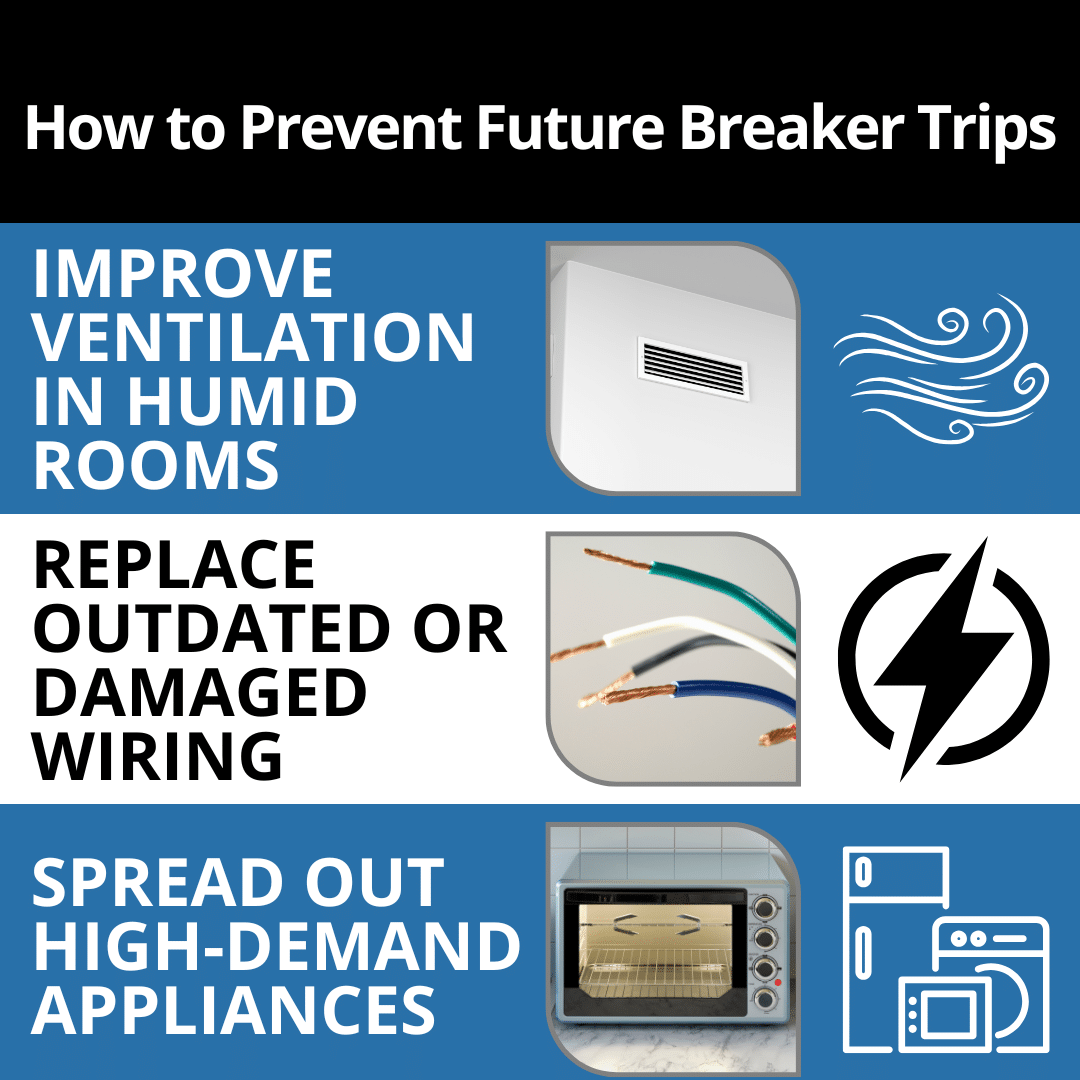
Spread out high-demand appliances: Avoid using multiple high-draw devices on one circuit.
Use space heaters carefully: Never run them on a circuit powering other devices.
Install whole-home surge protection: This is especially helpful during NC’s intense thunderstorms.
Improve ventilation in humid rooms: Humidity increases resistance and can strain wiring.
Add new circuits if needed: Modern power demands often exceed older wiring systems.
Replace outdated or damaged wiring: Especially in crawlspaces where pests often chew on wires.
Related Questions
Why does the same breaker keep tripping?
Either the load is too high, or there’s faulty wiring or a damaged appliance in your home.
Do breakers wear out?
Yes. Breakers weaken with age or heavy use. A home inspection helps detect how worn circuit breakers are.
Can I fix a tripped breaker myself?
You can reset it, but repairs should be done by a professional.
Is it safe to ignore repeated trips?
No. Frequent trips signal unsafe electrical conditions and can impact your home’s value.
When to Call a Professional
Call a professional if:
- The breaker won’t reset
- It trips immediately every time
- There’s a burning smell
- Outlets show scorch marks
- The panel makes buzzing sounds
- Lights flicker often
Q&A Home Inspections can help determine whether your electrical system is safe and working correctly.
Conclusion
A tripped circuit breaker is more than a small inconvenience; it’s a safety feature alerting you to a bigger issue.
Understanding why breakers trip, what they mean, and how inspectors evaluate them gives you the knowledge you need to keep your home safe.
If you’re buying, selling, or maintaining a home in North Carolina, Q&A Home Inspections can help you catch electrical issues early and provide clear, trusted recommendations.