
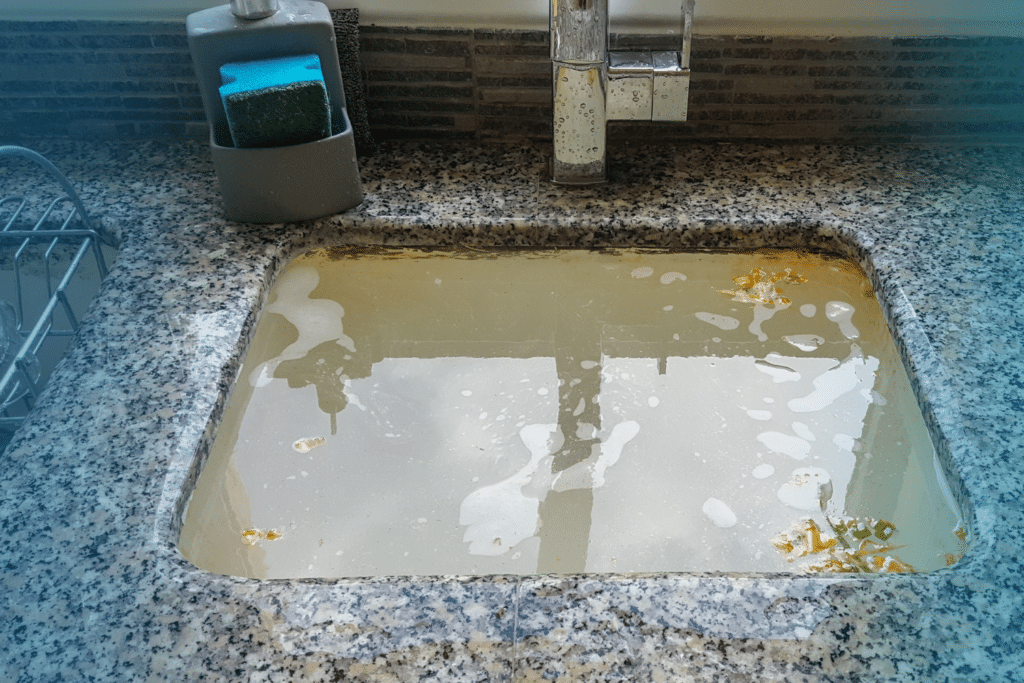
Is Your Kitchen Sink Clogged or Is It a Bigger Problem?
You finish rinsing the dinner dishes and notice the water just sits there, swirling slowly and refusing to drain. Sound familiar? A kitchen sink clogged with grease, food buildup, or soap scum is one of the most common household plumbing problems homeowners face. But here is the thing: not every slow drain is just a clog.
Sometimes, what looks like a simple blockage is actually a sign of something much more serious hiding inside your walls or beneath your floors. Knowing the difference can save you from a much bigger repair bill later.
At Q&A Home Inspections, we see kitchen plumbing issues regularly across North Carolina. So whether you are a homeowner, a buyer, or a seller preparing for an inspection, this guide will walk you through everything you need to know.
How Do You Know If Your Kitchen Sink Is Actually Clogged?
A kitchen sink is clogged when water drains slowly or stops draining altogether due to a blockage inside the drain line. Here are the most common signs to watch for:
- Water pools in the basin and drains slowly after you run the faucet
- You hear a gurgling or bubbling sound when water goes down the drain
- A foul odor rises from the drain, even when the sink is clean
- Water backs up into a second sink basin or even a nearby dishwasher
- Standing water remains in the sink after several minutes
It is also worth knowing the difference between a partial clog and a full blockage. A partial clog slows drainage noticeably, while a full blockage stops it completely. Either way, both deserve attention before they get worse.
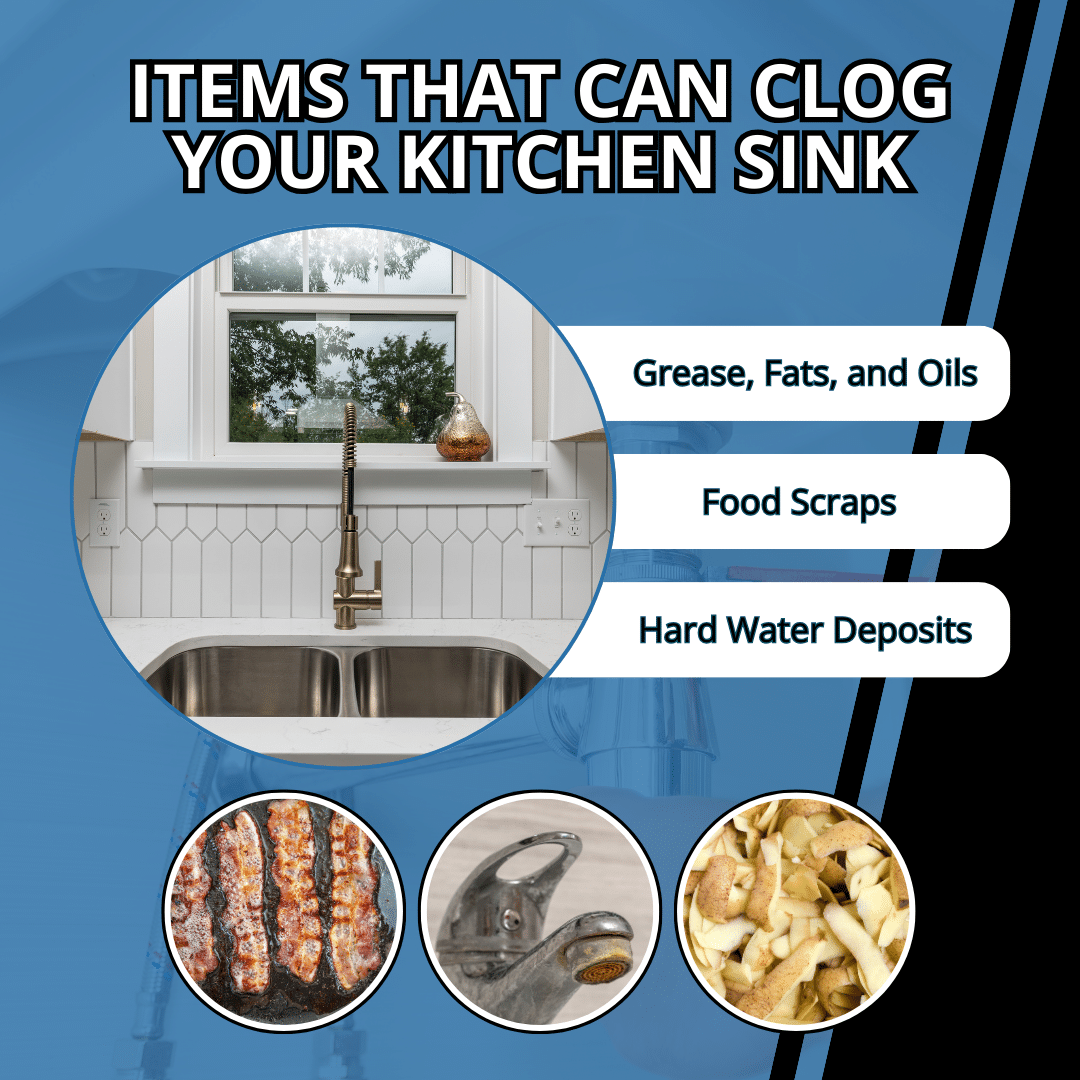
What Causes a Kitchen Sink to Clog?
Most kitchen sink clogs build up gradually over time.
In fact, household leaks can waste approximately nearly 900 billion gallons of water annually nationwide. That’s equal to the annual household water use of nearly 11 million homes.
The most common culprits include:
Grease and Cooking Oil
These liquids harden as they cool inside your pipes, building up layer by layer until they create a stubborn blockage.
Food Scraps
Even small bits of food from rinsing dishes accumulate inside the P-trap over time.
Soap Scum
Many dish soaps contain fats. When those fats mix with hard water minerals, they stick to pipe walls and gradually narrow the drain.
Hard Water Deposits
Many areas of North Carolina have hard water, which leaves mineral buildup inside pipes over time.
Garbage Disposal Issues
Starchy foods, coffee grounds, eggshells, and fibrous vegetables can all jam or back up the disposal and contribute to clogs downstream.
How to Prevent a Kitchen Sink from Clogging in the First Place
The good news is that most kitchen sink clogs are entirely preventable. Building a few simple habits goes a long way toward keeping your drain lines clear and your plumbing healthy.
Daily Habits That Make a Difference
- Always scrape plates into the trash before rinsing them
- Never pour cooking grease, oil, or bacon fat down the drain. Instead, let it cool in a container and throw it away
- Run cold water while using the garbage disposal, and keep running it for a few seconds after you turn it off
- Avoid putting coffee grounds, eggshells, pasta, rice, or fibrous vegetables like celery down the drain
Simple Tools and Products Worth Using
- Install a mesh drain strainer to catch food particles before they enter the pipes
- Use an enzyme-based drain cleaner monthly. Unlike harsh chemical cleaners, enzyme cleaners break down organic buildup without damaging your pipes
- Flush the drain with a pot of hot water once a week. This helps dissolve grease before it has a chance to harden inside the line
Longer-Term Maintenance Habits
- Clean the P-trap every few months. This is the curved pipe beneath your sink that collects grease and debris
- Schedule a professional drain cleaning once a year, before a clog develops, rather than after
- If your home has a water softener, keep it maintained. Hard water speeds up mineral buildup inside pipes
- Homes built before 1980 often have galvanized or cast iron pipes. These materials corrode over time, creating rough surfaces where buildup clings much more easily. Older North Carolina homes, in particular, benefit from more frequent drain attention
What Not to Do
- Do not reach for chemical drain cleaners like Drano as a first move. These products are caustic and can erode older pipes with repeated use
- Do not ignore a slow drain. A partial clog will almost always grow into a full blockage over time
- Do not assume that “flushable” wipes or other supposedly safe products are safe for older kitchen plumbing. They are not
Kitchen Sink Clog Prevention: Do This, Not That
|
DO THIS |
NOT THAT |
|
Scrape food scraps into the trash before rinsing dishes |
Rinse large food particles down the drain |
|
Pour cooking grease into a container and throw it away |
Pour grease, oil, or bacon fat down the sink |
|
Use a mesh strainer over the drain |
Leave the drain open with no filter |
|
Run hot water before and after using the garbage disposal |
Turn off the disposal immediately after use |
|
Use enzyme-based drain cleaner monthly |
Reach for chemical drain cleaners as a first fix |
|
Clean the P-trap every few months |
Ignore slow drainage until it becomes a full blockage |
|
Compost coffee grounds and eggshells |
Put coffee grounds or eggshells down the drain |
When a Clogged Kitchen Sink Is a Warning Sign of Something Worse
Here is where things get more serious. Sometimes, a kitchen sink clogged with what you think is just food or grease is actually showing you a symptom of a deeper plumbing problem. Learning to spot the difference is important.
It Might Be a Venting Problem
If you hear gurgling sounds in the sink after the water drains, that sound often points to a plumbing vent issue rather than a clog. Your drain system relies on venting pipes to move air through and allow water to flow properly.
When a vent gets blocked, it creates negative pressure that pulls air through the water in your drain trap. That gurgling sound is the result of that process happening, and a simple drain cleaner will not fix it.
It Might Be a Main Sewer Line Issue
Pay close attention if you notice multiple drains in your home acting sluggish at the same time. When two or more fixtures drain slowly or back up together, the issue is very likely in the main sewer line rather than one individual kitchen drain.
Tree root intrusion is a common culprit, especially in established NC neighborhoods where large root systems grow toward the moisture in buried sewer lines.
It Might Be Causing Hidden Water Damage
A kitchen sink that backs up repeatedly can force water and moisture into the cabinet underneath. Over time, that moisture leads to soft or warped wood, mold growth behind the cabinet walls, and damage to your flooring. Many homeowners never notice this damage until it has already spread.
During inspections across North Carolina, our team regularly finds water staining, soft cabinet floors, and early mold growth that all started with a drain issue the homeowner had simply learned to live with. If a clog keeps coming back despite your best efforts, that pattern is a strong signal to call a professional for a full plumbing evaluation.
What Home Inspectors Look for Around the Kitchen Sink
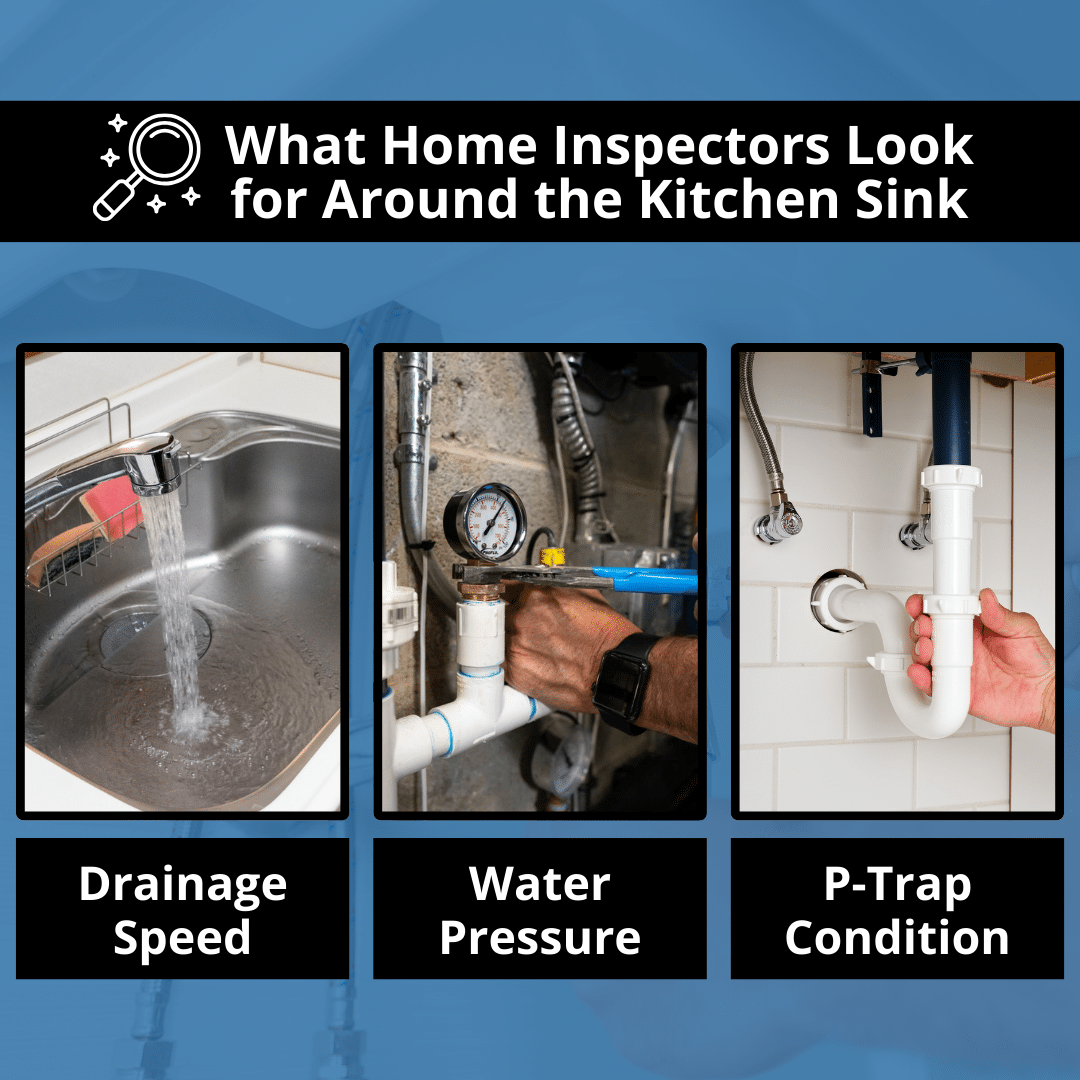
A professional home inspection goes well beyond turning on the faucet to see if water flows. When Q&A inspectors evaluate a kitchen sink, they actively look for functional issues as well as signs of past damage that a homeowner may not even realize are there.
Here is a breakdown of what that process typically covers:
|
What Inspectors Check |
What They Are Looking For |
|
Drainage speed |
Slow or zero flow that signals a blockage |
|
P-trap condition |
Leaks, corrosion, improper fittings, or evidence of past repairs |
|
Under-sink cabinet |
Water stains, soft wood, mold, or active moisture |
|
Pipe materials |
Older galvanized or cast-iron pipes are common in pre-1980 NC homes |
|
Water pressure |
Weak flow that may indicate a buildup deeper in the line |
|
Garbage disposal connection |
Improper hookup or blockage at the disposal drain line |
|
Venting signs |
Gurgling or odors that suggest a venting issue rather than a clog |
Importantly, our inspectors also check for signs of amateur or improper repairs under the sink. It is common to find plumbing that was patched with the wrong fittings or resealed in ways that will not hold up long-term.
These kinds of fixes often hide a bigger problem rather than actually solving it.
Should You Fix a Clogged Sink Before a Home Inspection?
Yes, if you are a seller, it is always a good idea to address a clogged kitchen sink before your home inspection appointment. Here is why it matters for both sides of a transaction.
If You Are Selling Your Home
A clogged or slow-draining kitchen sink will show up in the inspection report. Even a minor blockage can raise questions in a buyer’s mind about how well the home has been maintained overall. Addressing it ahead of time removes that concern entirely and helps your inspection go more smoothly.
However, it is equally important to fix the underlying cause rather than just mask the symptom.
Pouring a chemical drain cleaner down the sink the night before inspection may temporarily improve drainage, but it will not resolve a P-trap clog or a venting issue. A plumber can clear it properly and confirm there is nothing more serious at play.
If You Are Buying a Home
If a clogged kitchen sink shows up on your inspection report, ask the right questions before moving forward. Find out whether the seller has had it professionally repaired or simply patched.
Request documentation from a licensed plumber if possible, and consider whether the findings suggest a deeper plumbing issue that warrants further evaluation.
What Happens If an Inspector Finds a Clogged Sink During a Visit?
When an inspector identifies a clogged or slow-draining kitchen sink, it gets documented in the inspection report along with photos and a description of the observed condition. The finding does not automatically fail the home or kill a deal, but it does carry weight depending on what the inspector observes.
A simple slow drain typically gets flagged as a maintenance item, meaning it requires attention but is not an urgent structural or safety concern.
However, if the inspector also notices water damage under the cabinet, signs of mold, corroded or improperly repaired pipes, or drainage issues in multiple areas of the home, those findings become much more significant and may call for a specialist evaluation.
Related Questions
Can a clogged kitchen sink cause water damage?
Yes. When a kitchen sink backs up repeatedly, water and moisture can seep into the cabinet below and damage the wood, flooring, and drywall nearby. Over time, that moisture also creates ideal conditions for mold growth, which spreads quickly and can be expensive to remediate.
How much does it cost to fix a clogged kitchen sink in NC?
A basic drain clearing typically runs between $100 and $250 in North Carolina, depending on the complexity of the clog and the plumber you hire. However, if the issue turns out to be a main line problem, a venting issue, or involves pipe repair, costs can increase significantly.
Will a home inspector fail a house for a clogged drain?
No. Home inspectors do not pass or fail homes. Instead, they document conditions and flag items and defects that need attention. A clogged drain will appear in the report, but whether it affects negotiations depends on how serious the finding is and what it may indicate about the broader plumbing system.
How do I know if my clog is in the drain line or the main sewer line?
The clearest sign of a main sewer line problem is when multiple drains in your home act sluggishly or back up at the same time. If only the kitchen sink is affected, the clog is most likely localized to that drain line or P-trap. If other fixtures are also draining slowly, or if water and moisture back up in one fixture when you use another, call a plumber promptly.
Conclusion
A kitchen sink clogged with grease or food buildup is usually a manageable problem. But sometimes, that slow drain is your home’s way of telling you something more serious is going on underneath. The key is knowing when to grab the plunger and when to call a professional.
As a homeowner, the best thing you can do is stay proactive. Build good prevention habits, pay attention to the warning signs, and do not ignore a drain that keeps coming back as a problem. And if you are heading into a real estate transaction on either side, make sure your home’s plumbing has been properly evaluated before the deal closes.
Not sure what your kitchen sink is telling you? Let Q&A Home Inspections take a closer look.